* All product/brand names, logos, and trademarks are property of their respective owners.
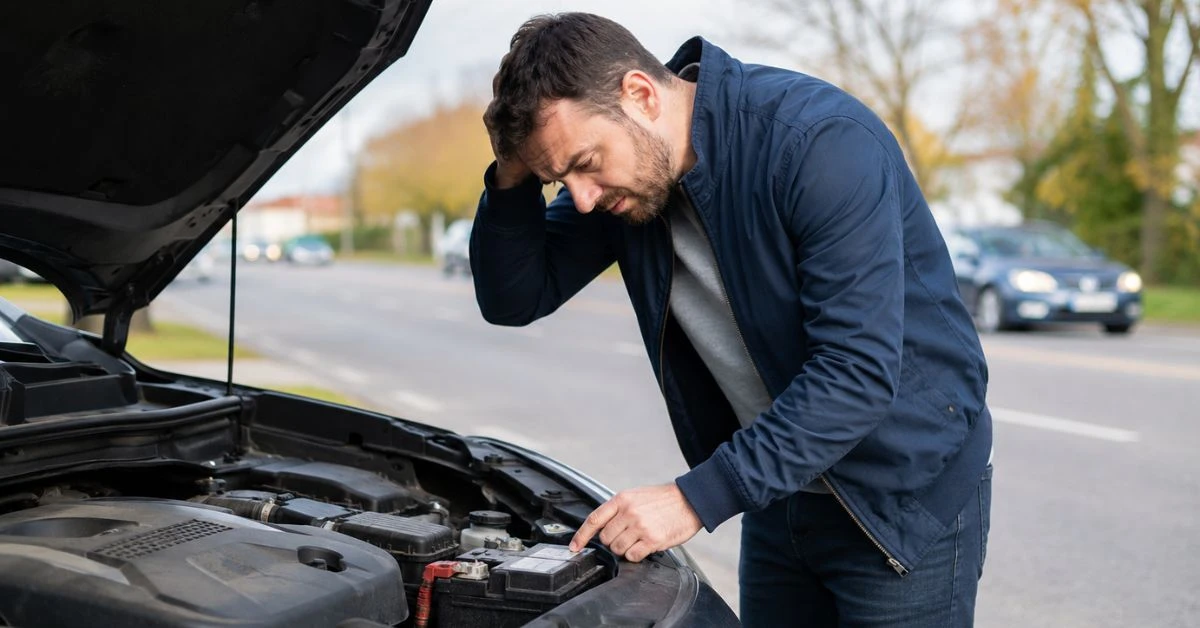
Most drivers don't think about their car battery until the day the engine refuses to start. Unfortunately, battery problems rarely occur at a convenient time.
Whether you're commuting to work, dropping the kids off at school, or preparing for a long journey, a failing battery can leave you stranded when you least expect it.
The good news is that car batteries usually show several warning signs before they fail completely. Recognising these symptoms early can help you avoid unexpected breakdowns, costly recovery fees, and the stress of being stuck with a vehicle that won't start.
In many cases, identifying the problem early gives you enough time to arrange professional auto battery replacement services before a complete battery failure disrupts your plans.
Most car batteries last between three and five years, although their lifespan depends on several factors.
Things that can shorten battery life include:
Frequent short journeys
Extreme hot or cold weather
Long periods without driving
Electrical faults
Heavy use of in-car electronics
Poor battery maintenance
If your battery is approaching the four-year mark, it's worth paying closer attention to any changes in vehicle performance.
One of the earliest warning signs is a slow engine crank when starting the car.
Instead of firing up immediately, the engine may sound sluggish or take longer than usual to turn over. This happens because the battery is struggling to provide enough power to the starter motor.
Many drivers ignore this symptom until the battery fails, but it is often the first sign that replacement may soon be needed.
A clicking sound when attempting to start the car often indicates that the battery doesn't have enough power to engage the starter motor.
If you hear repeated clicking but the engine doesn't turn over, your battery may be severely discharged or nearing the end of its lifespan.
The battery warning light on your dashboard should never be ignored.
However, it's important to understand that this light doesn't always mean the battery itself is faulty.
It can also indicate problems with:
The alternator
Charging system
Battery terminals
Drive belt
Electrical wiring
If the battery light remains illuminated while driving, the vehicle should be inspected as soon as possible.
A healthy battery provides consistent voltage to your vehicle's electrical systems.
When battery performance starts to decline, lights may appear dimmer than usual, especially when starting the engine or using multiple electrical features at once.
You may notice:
Dull headlights
Flickering dashboard lights
Dim interior lighting
Inconsistent brightness
These symptoms often become more noticeable during the winter months.
Modern vehicles rely heavily on electrical systems and onboard computers.
A weak battery can cause:
Slow electric windows
Unresponsive infotainment systems
Delayed touchscreen responses
Faulty parking sensors
Random warning messages
Because modern vehicles increasingly rely on stable voltage, battery problems can affect far more than just engine starting.
Many newer vehicles feature automatic start-stop technology to improve fuel efficiency.
If the start-stop system suddenly stops operating without explanation, a weak battery may be responsible.
Manufacturers often disable this feature automatically when battery voltage drops below an acceptable level.
A weakening battery can sometimes affect convenience features before causing major starting issues.
You may notice:
Reduced remote locking range
Delayed keyless entry response
Intermittent push-button start problems
These small annoyances can be early indicators of battery deterioration.
Visual inspection can reveal battery problems before they cause a breakdown.
Look for:
White powder deposits
Green or blue corrosion
Rust-like buildup
Dirty battery terminals
Corrosion can restrict electrical flow and reduce charging efficiency.
If your car regularly requires jump-starting, the battery is sending a clear message.
While one flat battery may result from accidentally leaving lights on, repeated jump starts usually indicate that the battery can no longer hold a sufficient charge.
In most cases, replacement is the most reliable solution.
Battery damage isn't always internal.
Extreme temperatures and age can cause the battery casing to bulge or swell.
A swollen battery should be replaced immediately, as it may become unsafe to use and could fail without warning.
A simple voltage test can provide a useful indication of battery health.
|
Battery Condition |
Voltage Reading |
|
Fully Charged |
12.6V or higher |
|
Good Condition |
12.4V–12.6V |
|
Weak Battery |
12.2V–12.4V |
|
Very Low Charge |
Below 12.2V |
|
Likely Dead |
Below 12.0V |
Using a digital multimeter can help identify battery issues before they lead to complete failure.
Here's a simple comparison:
|
Symptom |
Battery Problem |
Alternator Problem |
|
The car won't start |
Yes |
Sometimes |
|
Frequent jump starts |
Yes |
Yes |
|
Battery warning light |
Sometimes |
Often |
|
Vehicle stalls while driving |
Rare |
Common |
|
Electrical failures while driving |
Rare |
Common |
Many drivers assume the battery is always the problem, but sometimes the charging system is to blame.
Several factors can reduce battery life.
Common causes include:
Old age
Extreme temperatures
Frequent short journeys
Corroded terminals
Leaving lights on
Faulty alternator
Parasitic electrical drain
Loose battery connections
Long periods without driving
Understanding the cause can help prevent future battery problems.
You don't always need specialist equipment to identify a weak battery.
Check for:
Corrosion
Cracks
Leaks
Swelling
Pay attention to how quickly the engine starts.
A slow crank is often an early warning sign.
Using a multimeter, measure battery voltage before starting the vehicle.
Compare the reading against the voltage guide above.
Turn on your headlights before starting the engine.
If they appear unusually dim or become noticeably brighter once the engine starts, the battery may be struggling.
Not every battery problem requires replacement.
Recharge the battery if:
The lights were accidentally left on
The battery is relatively new
The vehicle hasn't been driven recently
Consider replacement if:
The battery is over four years old
It won't hold a charge
It needs frequent jump-starts
The casing is swollen
Corrosion keeps returning
Performance continues to decline
A professional battery test can confirm whether replacement is necessary.
Replacement costs vary depending on the vehicle and battery type.
Typical UK costs include:
|
Battery Type |
Estimated Cost |
|
Small hatchback |
£60–£120 |
|
Family car |
£100–£180 |
|
AGM battery |
£150–£300 |
|
Premium vehicles |
£200–£400+ |
Many garages and mobile battery fitting services also charge labour costs for installation.
If your vehicle won't start:
Turn off all electrical accessories.
Check for obvious signs of battery damage.
Attempt a jump start if safe to do so.
Let the engine run for at least 20 minutes if successful.
Arrange a battery and charging system test.
Contact roadside assistance if the vehicle still won't start.
Acting quickly can help prevent further inconvenience and identify any underlying charging system issues.
A failing car battery rarely dies without warning. Slow engine cranking, dim lights, electrical glitches, dashboard warning lights, and frequent jump starts are all signs that your battery may be nearing the end of its life.
Recognising these symptoms early gives you time to test, recharge, or replace the battery before you're left stranded. Regular inspections, simple voltage checks, and routine servicing can also help extend battery life and reduce the risk of unexpected breakdowns.
If your battery is showing multiple warning signs, it's usually best to have it tested sooner rather than later. A proactive approach can save time, money, and the frustration of dealing with a vehicle that won't start when you need it most.

I’m Henry Smith, a content writer and subject matter expert specializing in automobiles and real estate. I create informative, engaging, and easy-to-understand content, sharing practical insights, industry trends, and valuable knowledge with readers.
A drift scooter can look like the perfect gift until you start comparing models. One has colourful l
13 October 2026
Using a professional taxi replacement service immediately after a collision is the most effective wa
3 October 2026
Buying a used Honda remains one of the smartest financial decisions for UK motorists seeking long-te
3 October 2026
Be the first to share your thoughts
No comments yet. Be the first to comment!
Share your thoughts and join the discussion below.

.webp&w=3840&q=75)
.webp&w=3840&q=75)


.webp&w=3840&q=75)