
* All product/brand names, logos, and trademarks are property of their respective owners.
Using flooring that is not suited to high-traffic conditions can lead to a range of issues. Smooth surfaces may become hazardous when wet, while thin or low-quality materials can wear down quickly or shift underfoot. In standing areas, poor flooring may also contribute to foot and joint discomfort during prolonged use.
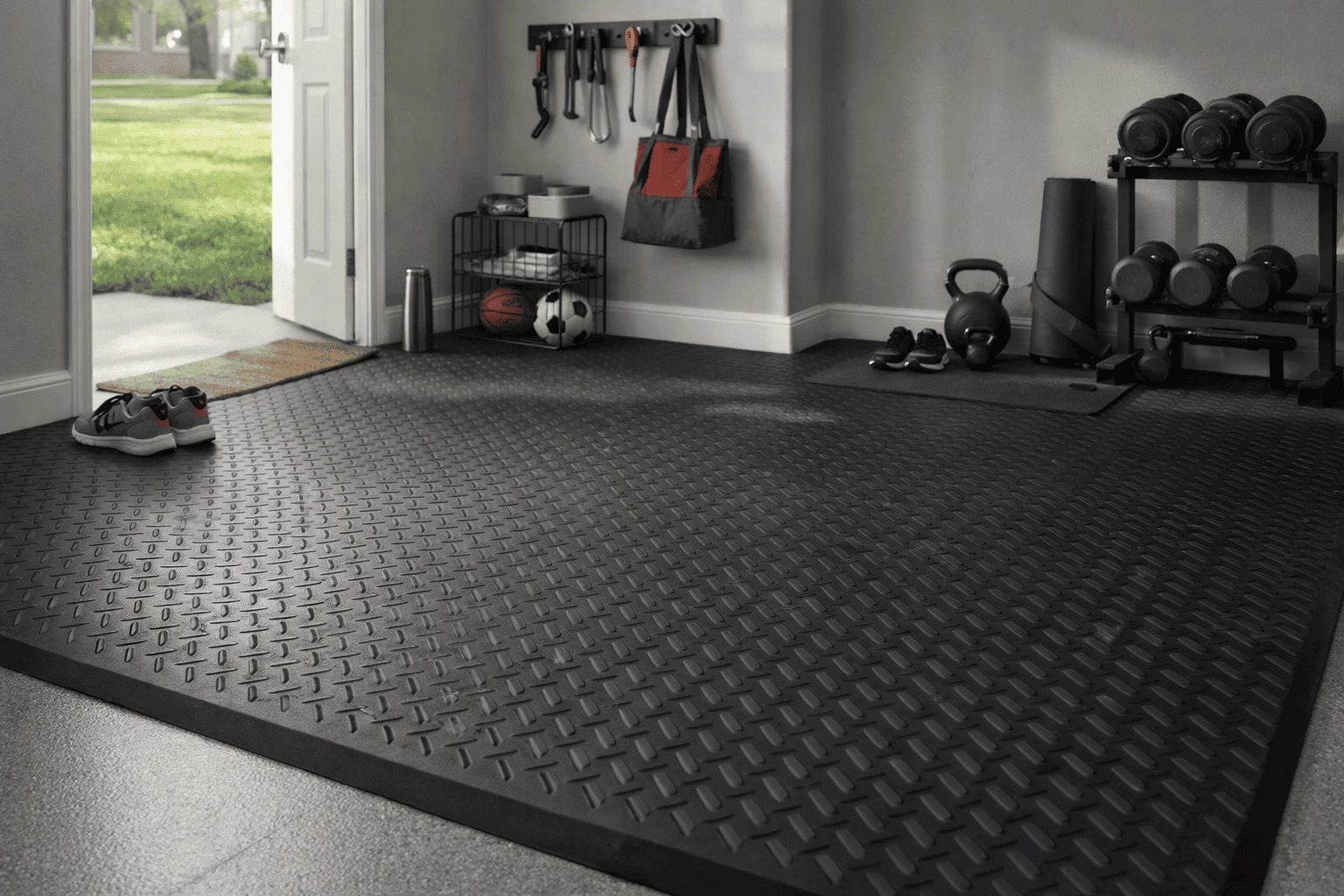
Rubber matting is designed to address these challenges by offering natural slip resistance, durability, and flexibility. When selected correctly, it provides a stable surface that performs reliably even in the busiest parts of the home. High-traffic, heavy-duty areas at home—like garages, workshops, entrances, and home gyms—take a serious beating from constant use. Standard flooring often can’t keep up, leading to wear, slips, and discomfort, especially in spots where you stand or move a lot. Rubber matting offers a smart solution, providing grip, cushioning, and durability. But not all mats are equal—choosing the right one means understanding the demands of each space, so your floors stay safe, stable, and comfortable over time
In many UK homes, garages and workshops are among the most demanding spaces. These areas often support heavy tools, storage units, bikes, or exercise equipment, all of which place pressure on the floor. Spills from oil, water, or cleaning products can further increase slip risks if the surface is not designed to cope with them.
Hallways, porches, and entrances are another common high-traffic zone. Frequent footfall, combined with wet shoes and outdoor debris, means these areas experience daily wear. Without suitable flooring protection, surfaces can quickly become slippery or marked. Utility rooms and home gyms also see more activity than expected. Washing machines, dryers, weights, and regular movement all contribute to surface fatigue. In these spaces, flooring needs to provide both grip and a degree of shock absorption to remain practical over time.
Using flooring that is not suited to high traffic conditions can lead to a range of issues. Smooth surfaces may become hazardous when wet, while thin or low-quality materials can wear down quickly or shift underfoot. In standing areas, poor flooring may also contribute to foot and joint discomfort during prolonged use.
Rubber matting is designed to address these challenges by offering natural slip resistance, durability, and flexibility. When selected correctly, it provides a stable surface that performs reliably even in the busiest parts of the home.
One of the first considerations when choosing rubber matting is how well it can cope with weight and repeated pressure. Garages and workshops often require matting that can support heavy loads without compressing permanently. Thicker mats typically offer better resistance to deformation and help protect the subfloor beneath.
Matting that is too thin may move, curl at the edges, or degrade more quickly under constant use. Selecting a mat designed for heavier applications helps ensure stability and longevity, especially in areas where equipment is frequently relocated.
Slip resistance is critical in areas exposed to moisture, dust, or debris. Textured rubber surfaces are designed to improve grip, reducing the likelihood of slips even in less-than-ideal conditions. This is especially important in entrances, utility rooms, and garages, where wet footwear and spillages are common.
Different surface patterns offer varying levels of traction, so understanding where and how the mat will be used is essential when making a choice.
In areas where standing for long periods is unavoidable, comfort becomes an important factor. Rubber matting with fatigue-reducing properties helps absorb impact and reduce pressure on feet and joints. This can make tasks such as DIY work, exercise, or household chores more comfortable over time, without compromising on durability.
Standing workstations and DIY benches benefit from matting that prioritises comfort. Anti-fatigue designs use cushioned structures to reduce strain while remaining firm enough to provide stability. These mats are commonly used in workshops or utility spaces where prolonged standing is part of everyday use.
Entrance areas require matting that focuses on managing dirt and water. Open-structured designs allow debris and moisture to fall away from the surface, helping to keep surrounding floors cleaner and safer. This type of matting is particularly useful in homes where entrances see constant use throughout the day.
Some areas need a balance between grip and comfort. Non-slip comfort mats with patterned surfaces are often used in garages, utility rooms, and home gyms, where movement is frequent, and stability is essential. These mats provide traction while also offering a more forgiving surface underfoot.
For spaces that combine high use with long standing periods, heavy-duty fatigue matting offers a practical solution. These mats are designed to withstand frequent use while still reducing discomfort, making them suitable for demanding environments that require both toughness and ergonomic support.
Loose lay matting is valued for its flexibility and ease of installation. Mats with ramped edges help reduce trip hazards and can be repositioned as needed, making them suitable for garages or temporary work areas where layouts may change.
Larger areas such as sheds or home gyms often benefit from roll-out matting, which provides consistent coverage across the floor. Rubber Products typically manufactured to handle repeated foot traffic while offering reliable grip, making them suitable for wide, open spaces that require uniform protection.
These environments demand matting that can handle weight, movement, and exposure to dirt or oil. Textured surfaces help maintain grip, while durable construction ensures the mat remains stable over time. Larger spaces may benefit from roll matting, while individual mats work well in targeted standing zones.
In entrances and utility rooms, moisture control and slip resistance are key. Matting designed to trap debris helps prevent dirt from spreading further into the home, while non-slip surfaces improve safety during wet conditions.
Home gyms and standing areas require flooring that absorbs impact and reduces strain. Rubber matting in these spaces should support movement, protect the subfloor, and provide enough cushioning to remain comfortable during regular use.
Choosing rubber matting for high traffic and heavy-duty environments is largely about understanding how different spaces are used and what demands they place on flooring. Areas such as garages, entrances, and home gyms require solutions that prioritise durability, slip resistance, and comfort, rather than appearance alone.
By focusing on factors such as thickness, surface texture, and fatigue reduction, homeowners can select matting that performs reliably under daily use. Proper care and maintenance further ensure that rubber matting remains effective and safe over the long term. For those exploring practical flooring solutions and learning more about available options, resources, and product ranges available through therubbermats.uk can provide useful reference points when planning improvements for busy home environments.

Evan is a UK-based writer and industry enthusiast covering home improvement, construction, and lifestyle trends. With a keen eye for practical solutions and emerging innovations, he delivers insights that inform and inspire readers.
When people plan a renovation, most of the excitement goes toward the big decisions: flooring, paint
17 September 2026
There's a particular kind of room that looks "finished" without you being able to say exactly why. O
7 September 2026
Every trade counter and builders' merchant has a section that's slightly harder to categorise than t
3 September 2026
Be the first to share your thoughts
No comments yet. Be the first to comment!
Share your thoughts and join the discussion below.
%20(1).webp&w=3840&q=75)

.webp&w=3840&q=75)
.webp&w=3840&q=75)


.webp&w=3840&q=75)

.webp&w=3840&q=75)