
* All product/brand names, logos, and trademarks are property of their respective owners.
When it comes to protecting your home from the unpredictable UK weather, door thresholds play a more important role than many realise. Whether you’re managing draughts, preventing rainwater from entering, or seeking a smoother transition between rooms and surfaces, selecting the right threshold for your front door can significantly enhance comfort, safety, and functionality.
A well-fitted threshold doesn’t just help maintain a consistent indoor temperature — it improves accessibility, supports energy efficiency, and reduces trip hazards. With various types, finishes, and installation methods available, it can be challenging to choose the right one. This guide explores the options available in UK homes, explaining key features, practical applications, and selection criteria to make the decision process easier.
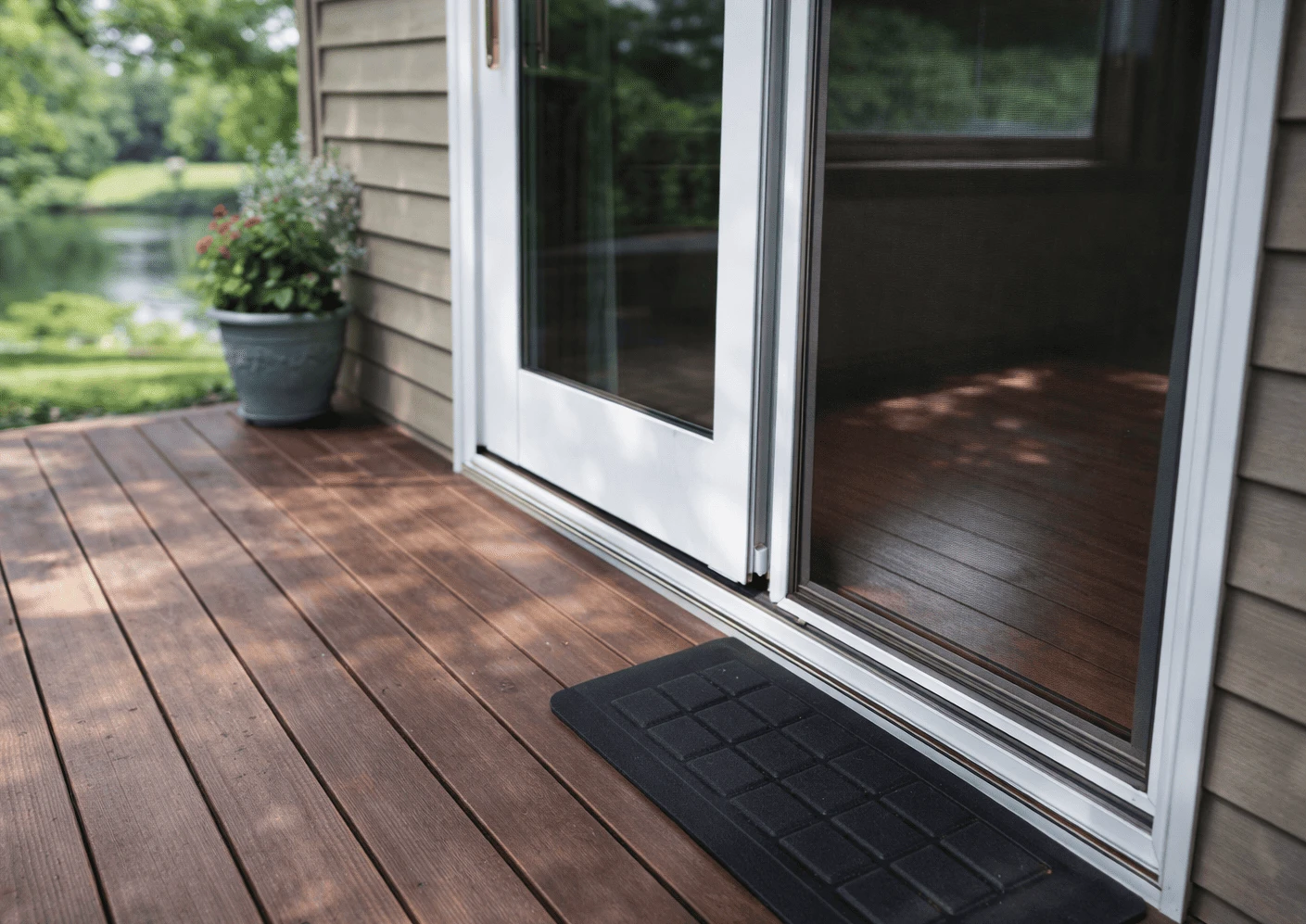
A door threshold is the strip or profile that bridges the gap at the bottom of a doorway, creating a seal between the door and the floor. Its primary purpose is to prevent draughts, limit moisture ingress, and provide a smooth transition between surfaces that may differ in height or material. Thresholds are especially useful in older homes or properties with uneven floors, where they reduce trip hazards and make doorways safer for all residents.
UK homes face wet weather, wind, and seasonal temperature fluctuations. A correctly installed threshold can prevent rainwater from entering, block cold draughts, and contribute to energy efficiency by helping maintain a stable indoor temperature. Over time, this can reduce heating costs and improve overall comfort. Thresholds are particularly relevant in areas prone to damp conditions or exposed to harsh weather.
Door thresholds also contribute to accessibility standards outlined in Part M of the UK Building Regulations. For wheelchair users, elderly residents, or families with prams, a ramped or low-profile threshold makes entry and exit smoother and safer. Compliance depends on factors like threshold height, angle, and doorway configuration, so careful measurement and planning are essential.
Aluminium thresholds are strong, lightweight, and resistant to corrosion, making them a common choice in UK homes. They are suitable for a range of indoor and outdoor environments and can be installed using adhesive strips or screws, depending on the floor type.
Self-adhesive profiles for wood or carpeted floors
Aluminium profiles for laminate, vinyl, or tiled floors
Flat edging bars for narrow gaps or flush-fitting areas
Anodised trims suitable for indoor and outdoor use
Ramped profiles for level transitions and accessibility
These types accommodate different floor heights, doorway configurations, and installation methods, helping to create smooth transitions and safer entryways.
| Product Type | Best For | Fixing Method | Floor Types | Finish |
|---|---|---|---|---|
| Self-Adhesive Aluminium | Interior transitions | Adhesive | Carpet, Timber | Silver/Grey |
| Aluminium for Laminate/Vinyl/Tiles | Wet-prone areas | Adhesive | Laminate, Tile, Vinyl | Brushed |
| 35 mm Flat Aluminium Edging Bar | Narrow gaps | Adhesive | Flat surfaces | Polished |
| Anodised Aluminium Edge Trim | High durability | Adhesive | Hard surfaces | Anodised |
| 41 mm Anodised Ramped Profile | Wheelchair/Step access | Screw-Fixed | Mixed floors | Anodised |
Ramp thresholds create a gentle incline that bridges height differences between floors. They are particularly useful for:
Uneven floor levels
Step-down or raised door entries
Wheelchair or pram access
Reducing trip hazards for elderly residents
Self-Adhesive Ramp Thresholds
Screw-Fixed Ramped Aluminium Profiles
Anti-Slip Aluminium Ramps
Edge Trim Ramp Thresholds
In a South Yorkshire home, a family installed a ramp threshold at the front entrance. The modification improved trolley and wheelchair access, reduced minor trip incidents, and enhanced insulation at the doorway. This illustrates how the correct threshold type can improve both convenience and safety in everyday use.
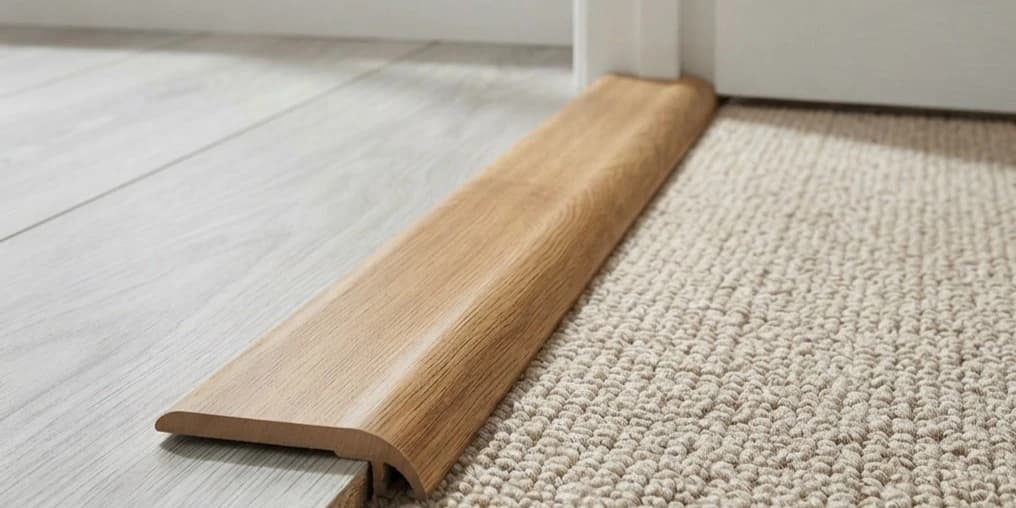
Wood effect aluminium thresholds combine the aesthetic appeal of timber with the durability of metal. These thresholds are particularly suited for homes with wooden interiors or traditional décor, offering a natural look without the susceptibility to warping or swelling in damp conditions.
Aluminium Wood Effect Door Threshold
Flat Aluminium Wood Effect Self-Adhesive Threshold
Wood Effect Carpet Threshold Ramp (Optional)
Benefits
Wood effect finishes complement rustic and traditional interiors, integrate seamlessly with timber floors, and provide an attractive, low-maintenance alternative to solid wood.
UPVC thresholds are lightweight, durable, and easy to maintain. They are particularly suitable for entrances with lower foot traffic or properties where simple upkeep is preferred.
Standard wood-effect UPVC thresholds for typical doorway heights
Thicker profiles for entrances with slightly higher floor transitions
These thresholds provide a functional and low-maintenance alternative to metal or timber, while still accommodating a variety of floor types and interior styles.
Key Considerations
Durability: UPVC performs well under regular use but may be less robust than aluminium in high-traffic or exposed areas.
Installation: Most UPVC thresholds are easy to install with adhesive or screw fixings, depending on the floor type.
Compatibility: Suitable for carpeted, tiled, or laminate floors, particularly in entrances with minor level differences.
| Feature | Aluminium | UPVC Wood Effect |
|---|---|---|
| Durability | High | Moderate |
| Weather Resistance | Excellent | Good |
| Aesthetic Options | Brushed, Anodised, Wood Effect | Timber-look designs |
| Maintenance | Low | Ultra-low |
| Floor Type | Recommended Threshold |
|---|---|
| Carpet | Self-Adhesive Aluminium or Wood Effect Ramp Trim |
| Tile / Vinyl | Aluminium for Wet Floors |
| Wood / Laminate | Aluminium or UPVC Wood Effect |
| Mixed Floors | Ramped or Transition Thresholds |
Weather Exposure: High-exposure areas benefit from anodised aluminium or anti-slip ramps, while low-exposure areas can use wood effect or UPVC.
Accessibility Needs: Level differences or wheelchair access may require ramp thresholds.
Aesthetic Preferences: Choose brushed aluminium for modern finishes, wood effect for traditional looks, or UPVC for budget-conscious options.
Measure width, height difference, and floor depth carefully before installation.
Choose fixing type appropriate for the surface: self-adhesive for even surfaces, screw-fixed for uneven or high-traffic areas.
Avoid common mistakes like skipping measurements, applying thresholds to dusty or wet floors, or mismatching floor types.
A door threshold may seem like a small architectural detail, but it plays a key role in everyday comfort, safety, and accessibility. Understanding the differences in materials, profiles, and installation methods allows homeowners to select a threshold that fits their property’s needs, floor types, and weather exposure.
Whether prioritising durability, aesthetic appeal, or ease of use, the right threshold ensures smoother transitions, improved insulation, and safer entryways for all residents. Taking a considered approach to choosing thresholds can make a noticeable difference to the overall functionality and comfort of any UK home.
When people plan a renovation, most of the excitement goes toward the big decisions: flooring, paint
17 September 2026
There's a particular kind of room that looks "finished" without you being able to say exactly why. O
7 September 2026
Every trade counter and builders' merchant has a section that's slightly harder to categorise than t
3 September 2026
Be the first to share your thoughts
No comments yet. Be the first to comment!
Share your thoughts and join the discussion below.

%20(1).webp&w=3840&q=75)

.webp&w=3840&q=75)
.webp&w=3840&q=75)


.webp&w=3840&q=75)

.webp&w=3840&q=75)