
* All product/brand names, logos, and trademarks are property of their respective owners.
In warehouses, industrial units, and commercial environments, floor markings are far more than simple visual cues. They define safe routes, separate pedestrian and vehicle traffic, highlight hazards, and bring structure to spaces that are often busy and complex. When markings fade, wear away, or become slippery, the risk to both people and operations increases.
Improving floor markings is often one of the most effective ways to enhance safety and organisation without major structural changes. Clear lines improve navigation, reduce uncertainty, and support safer working practices across a variety of environments—from internal warehouse floors to external yards and car parks.
A key consideration when selecting line marking solutions is durability. Industrial spaces experience constant movement, friction, and exposure to varying conditions. Coatings that are not designed for this level of use can deteriorate quickly, leading to unclear markings and increased maintenance demands. Choosing paints that combine visibility, grip, and long-term performance is essential for safer and more functional workspaces.
Warehouses often operate with multiple types of traffic sharing the same space. Forklifts, pallet trucks, delivery vehicles, and pedestrians all need to coexist safely. Clear floor markings help establish boundaries, define routes, and reduce uncertainty in shared areas. Pedestrian walkways that are clearly marked allow staff to move confidently around the facility, while designated vehicle routes help operators maintain predictable paths. This visual separation reduces the likelihood of near misses and collisions, particularly in high-activity zones such as loading bays and access points.
Slips and trips remain one of the most common causes of workplace injuries in industrial settings. Smooth or worn floor surfaces, especially in areas exposed to dust or moisture, can quickly become hazardous. Line markings that incorporate non-slip properties improve traction while still providing visual clarity. Paints with built-in grip are particularly beneficial in walkways, transition areas, and zones where staff frequently change direction or speed. Over time, this approach supports a safer environment by addressing both visibility and underfoot stability.
Clear floor markings are widely recognised as a practical way to support workplace safety expectations in the UK. While every site has its own requirements, consistent and well-maintained markings demonstrate a proactive approach to risk management. Defined walkways, hazard zones, and restricted areas make safety information easier to understand at a glance. When these markings remain visible and effective over time, they contribute to a more organised and compliant working environment.
Industrial floors experience constant activity, with staff and equipment moving repeatedly along the same routes throughout the day. To ensure clear and durable guidance, Floor Paints are often used as a reliable solution for defining pedestrian and vehicle routes. These paints are designed to withstand heavy traffic and demanding conditions, making them suitable for both internal warehouse floors and external areas such as yards and loading zones.
Traditional floor paints often struggle to balance appearance with safety. Smooth finishes may look clean but can increase slip risk in busy or damp conditions. Paints designed with textured surfaces improve grip in pedestrian routes, entrances, and machinery zones without requiring additional treatments. This creates safer surfaces while maintaining clear, defined markings.
Industrial floors are rarely static. Movement, vibration, and temperature fluctuations can affect surface coatings over time. Flexible acrylic or polymer-based formulations cope with ongoing stress without cracking or failing prematurely. Low-odour, quick-drying characteristics also make these paints practical for operational environments where downtime must be minimised.
Concrete is one of the most widely used flooring materials in warehouses and industrial units. Untreated concrete can become dusty, worn, or slippery over time. Durable line markings restore clarity, improve navigation, and contribute to a cleaner, more organised workspace.
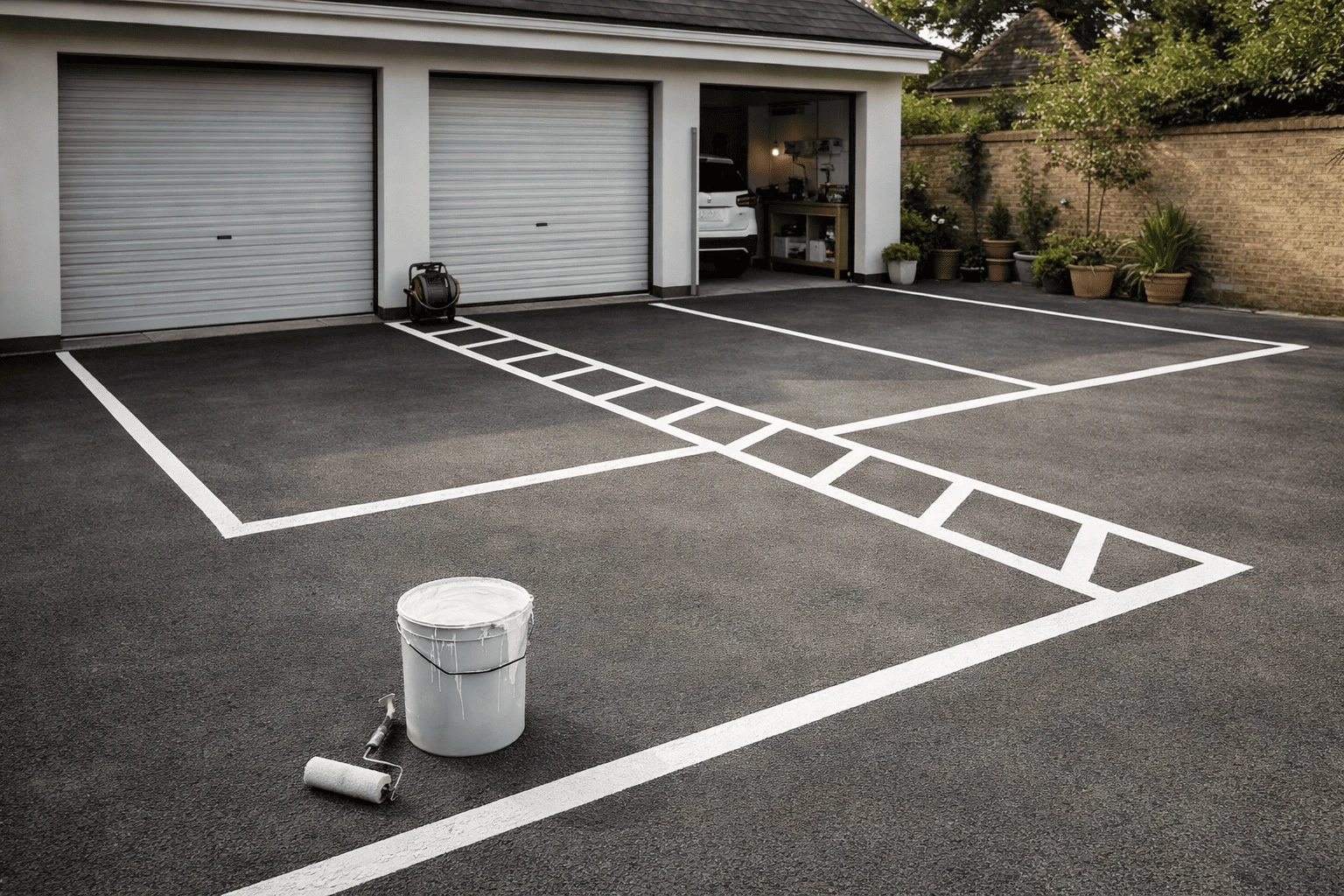
External industrial areas such as service yards and loading zones are often surfaced with tarmac or asphalt. Exposure to constant traffic and changing weather conditions can accelerate wear. High-performance line marking paints maintain visible, reliable markings in these high-traffic zones, supporting safety and operational efficiency.
Colour retention is important for both safety and maintenance. Faded markings are difficult to see, particularly in outdoor areas exposed to sunlight. UV-resistant paints maintain visibility over time and reduce the need for frequent repainting, ensuring consistent markings across warehouses, yards, and car parks.
Clearly defined pedestrian routes guide movement through busy warehouse spaces. When walkways are easy to identify, staff can move more confidently and safely between work areas. Anti-slip properties support safer movement while maintaining clear visual guidance.
Hazard zones, machinery areas, and restricted sections of a warehouse require clear visual definition. Marking these areas communicates risk effectively and reinforces safety boundaries. Durable, non-slip markings in these locations remain visible under heavy use, helping staff adhere to designated safety zones.
Loading bays are among the most demanding areas in industrial facilities. Constant movement and friction can wear away poorly performing coatings quickly. Choosing coatings designed to resist wear ensures these critical areas remain clearly marked, supporting safer interaction between people and vehicles.
Ease of application is important for maintenance teams. Anti-slip paints are typically applied using a brush or roller, with a medium pile roller recommended for even coverage. Spraying is generally avoided due to textured additives.
Under normal conditions, coatings become touch-dry in approximately four hours. Two coats are recommended, with at least four hours between applications. This allows work to be planned efficiently around operational schedules.
Coverage rates of around 6–8 square metres per litre allow teams to estimate material requirements accurately. Durable coatings reduce long-term maintenance needs, balancing safety with cost-effectiveness.
All surfaces should be sound, clean, and free from dust or contaminants before painting. Proper preparation ensures strong adhesion and consistent performance.
Surfaces must be completely dry before painting, and external applications should avoid rain. Adequate ventilation supports effective drying indoors.
Careful preparation and correct application help achieve clear, long-lasting markings that contribute to a safer and more professional workspace.
Effective line marking is fundamental for maintaining safe and functional industrial environments. Clear, durable markings help manage movement, reduce accidents, and bring structure to busy spaces without the need for complex changes. Focusing on durability, grip, and surface suitability allows markings to remain effective under heavy use. Thoughtful preparation and proper application further enhance long-term performance, reducing maintenance frequency. For additional guidance on selecting and applying industrial coatings, resources such as industrialmaterial.uk provide helpful insights and practical recommendations for maintaining safe, organised, and functional workspaces.
When people plan a renovation, most of the excitement goes toward the big decisions: flooring, paint
17 September 2026
There's a particular kind of room that looks "finished" without you being able to say exactly why. O
7 September 2026
Every trade counter and builders' merchant has a section that's slightly harder to categorise than t
3 September 2026
Be the first to share your thoughts
No comments yet. Be the first to comment!
Share your thoughts and join the discussion below.

%20(1).webp&w=3840&q=75)
.webp&w=3840&q=75)
.webp&w=3840&q=75)


.webp&w=3840&q=75)

.webp&w=3840&q=75)