
* All product/brand names, logos, and trademarks are property of their respective owners.
Outdoor spaces are an important extension of the home, yet in the UK they are frequently affected by excess moisture, uneven ground, and slippery surfaces. Persistent rainfall, limited sunlight, and soil conditions such as clay-heavy ground can quickly lead to waterlogged lawns and unsafe walking areas. These issues not only reduce how often outdoor spaces are used but can also present genuine safety concerns.
Practical surface reinforcement solutions are increasingly being used to address these challenges without replacing grass or altering the natural character of outdoor areas. Among these, rubber grass mats are often considered for their ability to support drainage while improving underfoot stability. This article explores how these mats work, where they are most effective, and why they are particularly well-suited to UK outdoor environments.
Outdoor conditions in the UK create a combination of environmental pressures that make drainage and surface safety ongoing concerns for homeowners. Understanding these factors helps explain why certain areas struggle year after year.
The UK experiences regular rainfall across most regions, and many gardens sit on clay-heavy soil that drains slowly. Clay retains moisture, and when combined with repeated foot traffic, the soil becomes compacted. Compaction reduces the soil’s ability to absorb water, leading to pooling and surface saturation.
Shaded areas worsen the problem. Limited sunlight slows evaporation and grass recovery, leaving surfaces damp for longer. Over time, grass thins, roots weaken, and bare patches develop, creating muddy and unstable ground.
Wet grass and compacted soil significantly increase slip risks. Informal lawn pathways, access routes to sheds, and play areas are particularly vulnerable. In colder months, moisture combined with algae or frost further increases hazard levels.
These conditions are especially problematic for households with children, older residents, or frequent visitors, where maintaining safe movement outdoors becomes a priority.
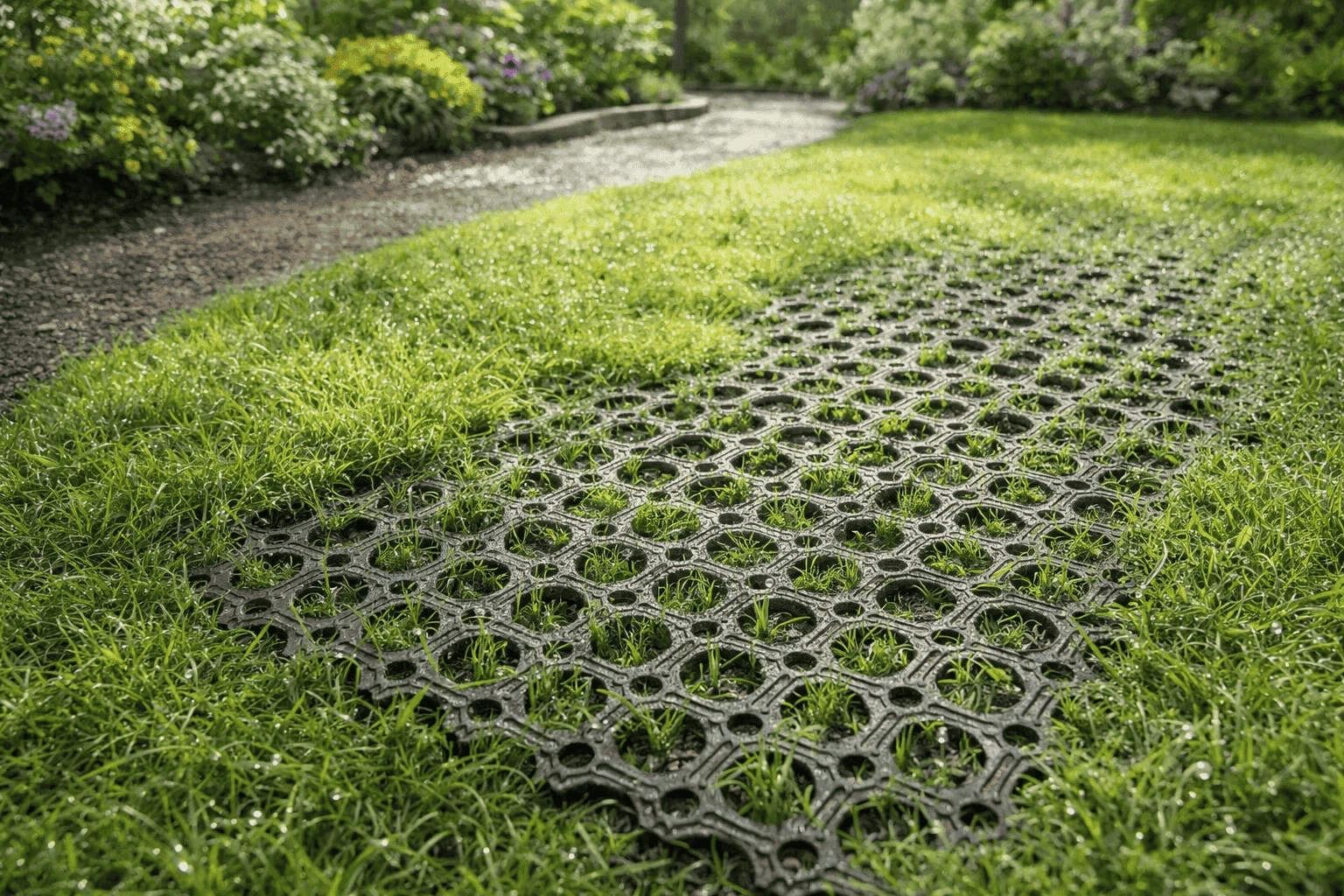
Rubber grass mats are surface reinforcement systems designed to sit directly on grass or soil. Rather than covering the lawn, they integrate with it, allowing grass to grow through while adding structural support.
The defining feature of rubber grass mats is their open-grid or perforated structure. Made from durable rubber, they distribute weight more evenly across the surface, reducing pressure points that cause ruts and worn patches.
Their textured finish improves grip, while the flexible material allows the surface to adapt to minor ground movement. As grass grows through the openings, the mat becomes visually subtle and blends into the lawn.
Drainage performance comes from the mat’s open design. Rainwater passes through the perforations into the soil below rather than pooling on the surface. This helps maintain healthier grass and reduces the muddy conditions that follow heavy rainfall. Improved airflow and reduced surface saturation also discourage moss and algae growth, both common contributors to slippery outdoor surfaces.
Traditional drainage solutions often involve removing turf or installing hard landscaping, which permanently changes the appearance of outdoor spaces. Surface reinforcement offers a less disruptive alternative.
Because reinforcement mats sit on top of the soil, they protect grass roots from excessive compaction while still allowing natural drainage. Weight distribution reduces stress on vulnerable areas, helping grass recover more effectively after use. This approach supports long-term lawn health while addressing drainage challenges in high-use zones.
Frequently used routes—such as shortcuts across lawns or access points to garden structures—are often the first areas to degrade. Reinforcing these zones helps stabilise the surface and prevent further erosion. Products within the rubber grass mats category are typically designed to combine load distribution with effective water flow, making them suitable for managing wear without altering the natural feel of the garden.
Slip prevention is a key consideration in outdoor environments where moisture is unavoidable. Surface reinforcement contributes to safer footing by improving traction and reducing instability.
The textured surface of rubber grass mats offers better grip than bare grass or compacted soil. By limiting water build-up and maintaining a firmer base, surfaces become more predictable underfoot during wet or frosty conditions. Better drainage also reduces the damp environments that allow moss and algae to develop, lowering long-term slip risks.
In areas where safety is especially important—such as play spaces or regularly used access routes—added surface stability can make everyday movement more secure. Reinforced surfaces also offer a degree of impact absorption, supporting safer use for people of all ages and pets.
The versatility of rubber grass mats makes them suitable for a wide range of domestic outdoor applications.
Lawn paths often experience concentrated wear, leading to uneven ground and drainage issues. Reinforcing these routes helps protect surrounding grass while keeping pathways usable throughout the year. High-footfall areas such as entrances, bin storage zones, or routes between buildings also benefit from reduced mud and improved stability.
Outdoor play areas experience frequent activity and are prone to surface degradation. Reinforcement helps maintain consistent ground conditions while reducing slip risks. Functional outdoor spaces used for storage or access also gain reliability from a more stable surface.
Ease of installation and low maintenance make surface reinforcement a practical option for UK gardens.
Installation generally involves minimal ground preparation, with mats laid directly onto grass or soil. Ensuring the surface is reasonably level helps achieve long-term stability, and grass growth over time further integrates the mats into the landscape.
Routine care is minimal. Clearing leaves and debris supports drainage, while occasional checks help ensure the surface remains even. During winter, keeping the area clear helps maintain grip in frosty conditions.
Managing drainage and surface safety is an ongoing challenge for UK homeowners, particularly in environments exposed to frequent rainfall and seasonal temperature changes. Reinforcing vulnerable areas can help maintain usability without compromising the natural character of gardens and lawns.
By improving water flow, stabilising the ground, and reducing slip risks, rubber grass mats support safer outdoor use throughout the year. When installed thoughtfully and maintained correctly, they offer a balanced, long-term approach to managing common outdoor surface issues. For additional information and guidance on outdoor surface solutions designed for UK conditions, further resources are available at therubbermats.uk.

Evan is a UK-based writer and industry enthusiast covering home improvement, construction, and lifestyle trends. With a keen eye for practical solutions and emerging innovations, he delivers insights that inform and inspire readers.
When people plan a renovation, most of the excitement goes toward the big decisions: flooring, paint
17 September 2026
There's a particular kind of room that looks "finished" without you being able to say exactly why. O
7 September 2026
Every trade counter and builders' merchant has a section that's slightly harder to categorise than t
3 September 2026
Be the first to share your thoughts
No comments yet. Be the first to comment!
Share your thoughts and join the discussion below.
%20(1).webp&w=3840&q=75)
.webp&w=3840&q=75)
.webp&w=3840&q=75)

.webp&w=3840&q=75)

.webp&w=3840&q=75)