
* All product/brand names, logos, and trademarks are property of their respective owners.
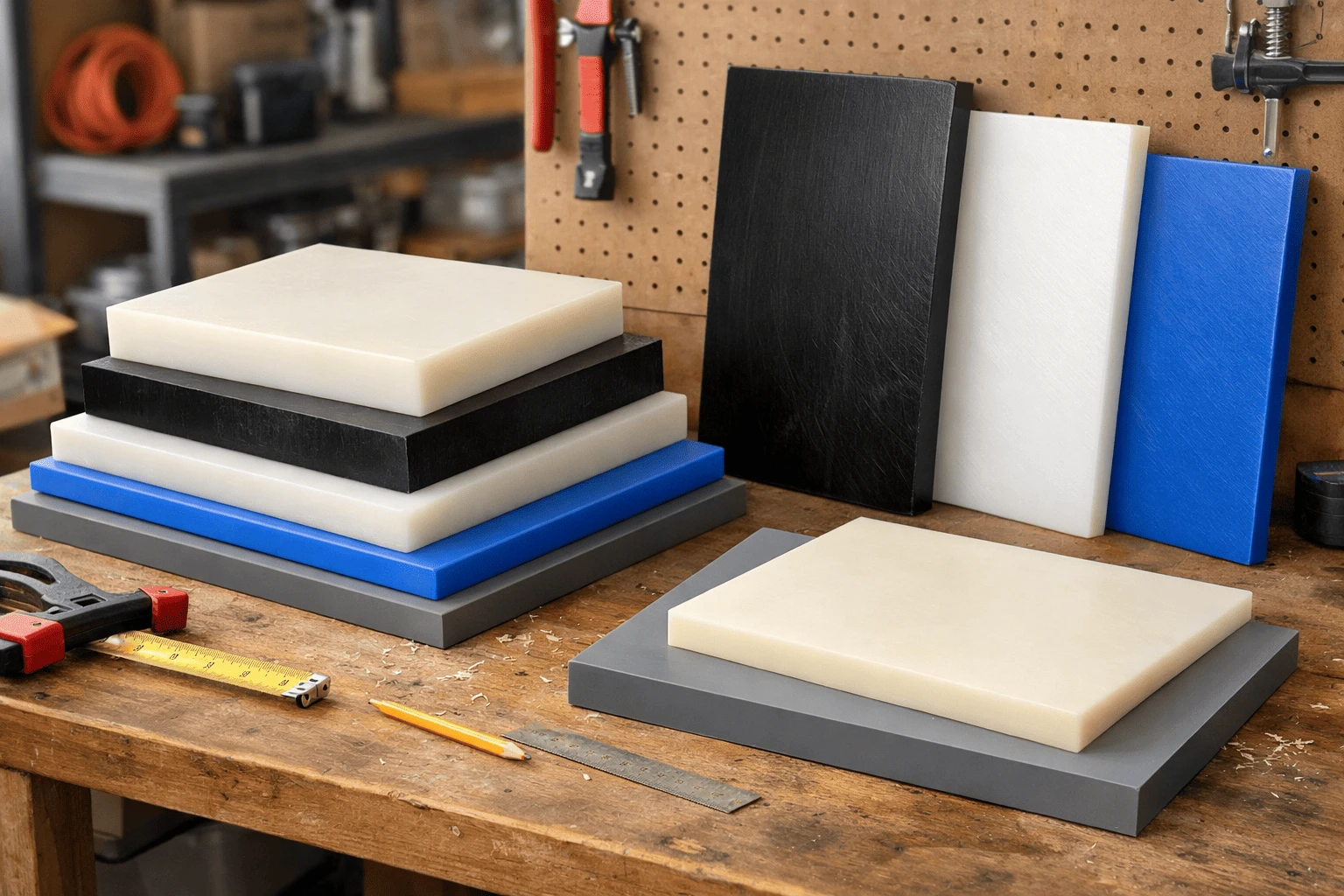
Plastic sheets have become an essential material for home improvement projects in the UK. Homeowners increasingly use them for lining garages, sheds, and utility rooms, as well as creating durable panels, splashbacks, and custom DIY components. They are a practical alternative to traditional materials such as timber, glass, and metal, offering advantages like lightweight handling, moisture resistance, and a wide range of thickness options suitable for both indoor and outdoor use.
The versatility of plastic sheets is another major reason for their popularity. Each type is engineered with specific properties in mind—some excel in high-wear environments, while others are ideal for precision components, low-friction movement, or easy-clean surfaces. Understanding the differences between plastic materials, their thickness, strength, and intended application ensures better project performance and longevity.
This guide explores the most commonly used plastic sheets in residential projects, outlines their typical applications, and provides practical advice for homeowners considering purchasing sheets online.
Plastic sheets are solid, flat materials designed to offer strength, protection, and long-term reliability. In home settings, they are often applied to wall linings, shed interiors, splashbacks, protective panels, and custom DIY builds. Compared to wood, metal, or glass, plastic sheets are lighter, easier to work with, and less susceptible to moisture-related issues.
Moisture resistance is a standout benefit, especially in the UK climate. Many plastic materials do not rot, swell, or corrode, making them ideal for garages, utility spaces, and outdoor structures. Plastic sheets also come in a range of thicknesses, allowing homeowners to select lighter options for lining or thicker sheets for impact resistance and load-bearing applications. Selecting the right sheet begins with understanding the environment in which it will be used. Factors such as indoor versus outdoor placement, exposure to heat or friction, and structural requirements all influence which plastic type is most suitable.
UHMWPE (Ultra High Molecular Weight Polyethylene) sheets are renowned for exceptional toughness and wear resistance. They perform reliably in areas that experience repeated impact or movement, making them ideal for garage floors, workshop surfaces, and high-traffic DIY projects.
These sheets offer excellent impact resistance and a naturally low-friction surface. Their durability, combined with moisture and chemical resistance, makes them a long-lasting solution for demanding home environments.
PE500 sheets balance strength and workability, making them suitable for protective panels, shelving, and work surfaces. Their colour options can help organise spaces such as utility rooms or storage areas without compromising durability.
PE500 performs well in areas exposed to regular knocks or moderate load-bearing applications. Its moisture-resistant properties make it versatile for both indoor and semi-outdoor spaces.
RG1000 sheets are engineered for extreme abrasion resistance, ideal for workshops, garage floors, and other high-contact areas.
In residential use, RG1000 can protect surfaces that experience repeated wear. It maintains structural integrity even under heavy use, providing a practical solution where other materials might degrade quickly.
HDPE (High-Density Polyethylene) is one of the most versatile options for home improvement.
HDPE sheets are lightweight, moisture-resistant, and suitable for indoor and outdoor applications. They are commonly used for wall cladding, shed linings, and splashbacks due to their ability to handle damp conditions and fluctuating temperatures.
Acetal sheets are valued for their dimensional stability and low-friction properties.
Ideal for projects involving moving components—such as hinges, rollers, or guide rails—acetal maintains its shape under load and offers reliable performance where precision is required.
Nylon sheets are strong and durable, making them suitable for brackets, spacers, and load-bearing elements in home DIY projects.
Nylon’s resistance to impact and wear ensures longevity, while its machinability allows for bespoke applications that require custom cutting or shaping.
PTFE sheets are designed for low-friction applications and can handle exposure to heat and chemicals.
They are ideal for specialist DIY tasks, such as creating sliding surfaces or insulating components exposed to higher temperatures. Their chemical resistance also makes them suitable for challenging conditions in workshops or outdoor builds.
Polypropylene is lightweight, cost-effective, and resistant to many chemicals.
It is often used for storage linings, cupboard interiors, and utility projects where moisture resistance is needed without adding unnecessary weight.
PVC sheets are widely used for their rigidity, easy-clean surface, and moisture resistance.
PVC is commonly applied as wall panels, garage linings, or protective surfaces. Its smooth surface is easy to maintain, making it suitable for hygiene-focused areas like kitchens or utility rooms.
When planning home improvement projects, it’s important to consider the strength, thickness, and suitability of the materials for the intended environment. Plastic Sheets provide a versatile solution, offering options for everything from lightweight decorative panels to durable, impact-resistant surfaces. Evaluating factors such as load-bearing capacity, moisture exposure, and abrasion requirements helps ensure that the chosen sheet performs reliably over time. By understanding the properties of different plastic materials, homeowners can make informed decisions tailored to their project needs rather than relying on generic solutions.
Plastic sheets offer flexibility, durability, and practical performance across a variety of home improvement applications. Materials such as UHMWPE and RG1000 provide exceptional wear resistance, while acetal, HDPE, and PVC cater to precision, moisture resistance, and indoor-outdoor versatility. Selecting the right type and thickness ensures a solution tailored to the project’s needs. Careful consideration of material properties, usage environment, and sheet thickness improves overall performance and reduces long-term maintenance. For homeowners seeking further guidance or exploring a wide range of options, additional information is available at primeplasts.uk, offering neutral references on materials and applications.

A content writer and industry researcher focused on technology, digital transformation, and modern business trends. Writes data-driven, reader-friendly articles that break down complex topics into practical insights for global audiences.
When people plan a renovation, most of the excitement goes toward the big decisions: flooring, paint
17 September 2026
There's a particular kind of room that looks "finished" without you being able to say exactly why. O
7 September 2026
Every trade counter and builders' merchant has a section that's slightly harder to categorise than t
3 September 2026
Be the first to share your thoughts
No comments yet. Be the first to comment!
Share your thoughts and join the discussion below.
%20(1).webp&w=3840&q=75)

.webp&w=3840&q=75)
.webp&w=3840&q=75)


.webp&w=3840&q=75)

.webp&w=3840&q=75)