
* All product/brand names, logos, and trademarks are property of their respective owners.
Floor matting plays a crucial role in UK homes and commercial spaces, often overlooked until wear, moisture, or safety concerns arise. With frequent rain, muddy gardens, winter grit, and busy households, selecting the right matting protects flooring, reduces cleaning time, and enhances safety. From entrance areas exposed to the elements to bathrooms where slips are a risk, choosing suitable matting is both practical and preventative.
This guide explores key types of floor matting, including entrance mats, everyday door mats, industrial barrier mats, anti-fatigue bathroom mats, and traditional coir options. You will gain insights into where each works best and what to look for when selecting one.
Before focusing on specific styles, it’s important to match matting to your environment. Performance depends on traffic levels, exposure to moisture, and the type of flooring underneath.
Assess how frequently the area is used:
Low-traffic spaces such as bedrooms or occasional-use doors can rely on lighter absorbent mats.
Medium-traffic areas, like family front doors, benefit from dirt-trapping fibres and non-slip backing.
High-traffic zones, including communal entrances, garages, or workshops, require heavy-duty or industrial-grade barrier mats.
In busy areas, thinner decorative mats tend to flatten quickly. Denser constructions, such as industrial-style mats, maintain structure and trap debris even after repeated use.
Outdoor mats should prioritize scraping and durability, withstanding rain, mud, and fluctuating temperatures without deteriorating.
Indoor mats focus on:
Absorbency
Floor protection
Stability on smooth surfaces
Many UK households benefit from a two-step system: a scraper-style mat outside and an absorbent mat just inside the door. This combination dramatically reduces dirt tracked into the home.
Slip resistance is essential, particularly on laminate, tile, or polished concrete floors. Rubber or latex backing grips securely without curling.
Thickness also matters: around 9mm or more is suitable for high-traffic entrances, offering durability without obstructing door clearance. In comfort-focused areas, such as kitchens or bathrooms, extra cushioning can reduce strain on joints during prolonged standing.
Maintenance should never be overlooked. Machine-washable mats suit family homes with pets or children, while heavier industrial mats may require brushing or hosing down. Choosing easy-care materials ensures matting continues performing effectively throughout the year.
Entrance mats act as the first barrier between outdoor debris and interior flooring. In the UK’s damp climate, this protective layer is essential.
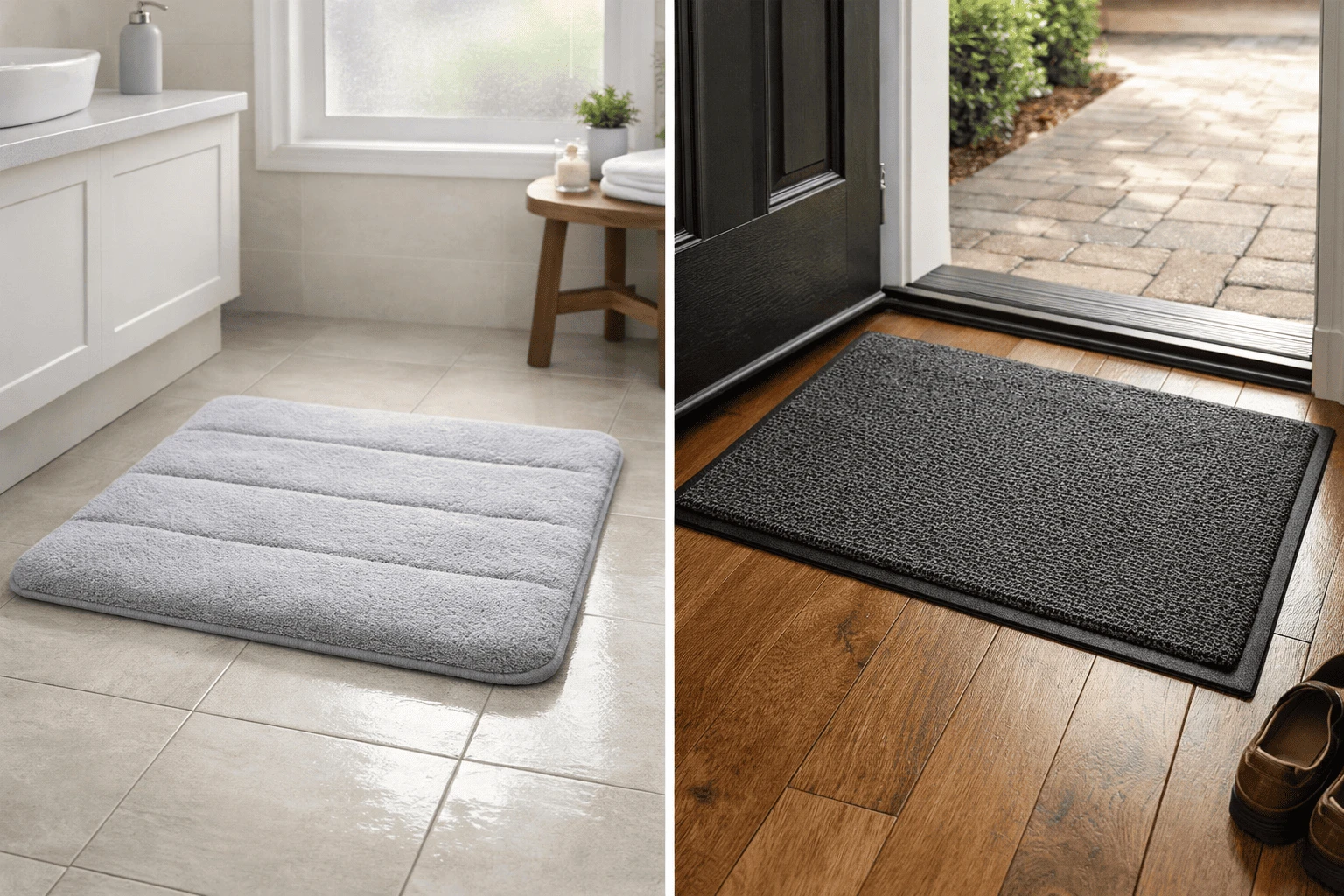
Durable Floor Matting is an effective approach for high-traffic doorways, preventing interior floors from wear caused by repeated footfall. In areas exposed to moisture, mats with open structures help water drain while trapping mud, making them suitable for garden-facing or workshop entrances. Industrial-grade floor matting provides resilience and long-lasting performance in demanding conditions.
Domestic mats can combine practicality with stability. Washable options simplify maintenance, and gripper-backed designs prevent mats from shifting on smooth surfaces.
Rubber-backed mats offer dependable grip while resisting moisture damage. Barrier-style mats are particularly valuable during autumn and winter, when grit and water are most prevalent.
Beyond the main entrance, everyday door mats protect interiors from gradual wear and tear.
Machine-washable mats simplify moisture management and dirt trapping. These mats are especially useful in hallways or mudrooms where repeated cleaning is necessary.
Hallways and kitchens experience constant movement. Long runner mats provide extended coverage, helping protect flooring from scratches and daily wear.
Functional mats can also complement décor. Subtle designs maintain dirt-trapping capability while enhancing the look of entryways, blending aesthetics with practicality.
For heavier-duty environments, industrial barrier mats provide enhanced resilience.
Industrial-grade mats are designed to withstand demanding conditions, providing grip and durability for garage floors, commercial entrances, or workshop areas.
Colour variations in mats can assist with subtle visual zoning, helping differentiate work zones or areas of high traffic in commercial or industrial settings.
Industrial mats perform well in both indoor and outdoor spaces where moisture and debris are unavoidable. Their robust structure ensures long-term protection for the underlying flooring.
Comfort is crucial in areas where people stand for extended periods.
Memory foam mats provide cushioning underfoot, particularly useful near sinks, worktops, or bathrooms. Coordinated mats around toilets or sinks offer safety and comfort without compromising hygiene.
Absorbent mats help reduce water spread across tiled floors. Pedestal mats provide coverage around toilets or sinks, maintaining dry, safe surfaces.
Reliable backing prevents mats from shifting on wet tiles — important for households with children or older adults.
Coir remains one of the most effective natural scraping materials.
Dense coir fibres remove mud efficiently, providing a protective barrier for flooring. Thickness improves durability and ensures effective scraping.
Supportive latex backing prevents movement and enhances safety, keeping mats in place on smooth surfaces.
Natural coir mats balance aesthetic appeal with functionality, offering a timeless style while maintaining their primary role as effective dirt-trapping barriers.
Regular care keeps mats performing effectively.
Shake or vacuum coir and fibre mats weekly.
Hose down rubber and barrier mats as needed.
Machine wash absorbent mats following care instructions.
Increase cleaning during winter when grit and salt accumulate. Rotate mats to distribute wear evenly.
Flattened fibres, reduced grip, or cracked backing indicate it may be time for replacement. Timely replacement prevents slips and protects the flooring.
Choosing appropriate floor matting depends on the environment it will serve. Busy entryways, wet areas, and industrial garages each benefit from materials designed for their unique challenges. Evaluating traffic, absorbency, and slip resistance ensures optimal protection and safety.

Digital marketing & SEO professional. Expert in guest posting and content growth for UK-focused websites.
When people plan a renovation, most of the excitement goes toward the big decisions: flooring, paint
17 September 2026
There's a particular kind of room that looks "finished" without you being able to say exactly why. O
7 September 2026
Every trade counter and builders' merchant has a section that's slightly harder to categorise than t
3 September 2026
Be the first to share your thoughts
No comments yet. Be the first to comment!
Share your thoughts and join the discussion below.
%20(1).webp&w=3840&q=75)

.webp&w=3840&q=75)
.webp&w=3840&q=75)


.webp&w=3840&q=75)

.webp&w=3840&q=75)