
* All product/brand names, logos, and trademarks are property of their respective owners.
Across the UK, architecture and interior design are evolving towards lighter, brighter, and more adaptable spaces. Homeowners are increasingly prioritising open-plan layouts, multifunctional rooms, and materials that enhance natural light while maintaining durability. In this shift, acrylic sheets — often referred to as Perspex — have become a popular choice for contemporary design applications.
From kitchen splashbacks to bespoke partitions and garden room panels, acrylic provides an ideal balance of clarity, lightweight handling, and impact resistance. Its versatility allows designers and DIY enthusiasts to explore practical solutions that support both aesthetic and functional requirements. The growing interest in acrylic reflects changing homeowner priorities — durability, customisation, and flexibility — which are shaping the future of UK architecture and design.
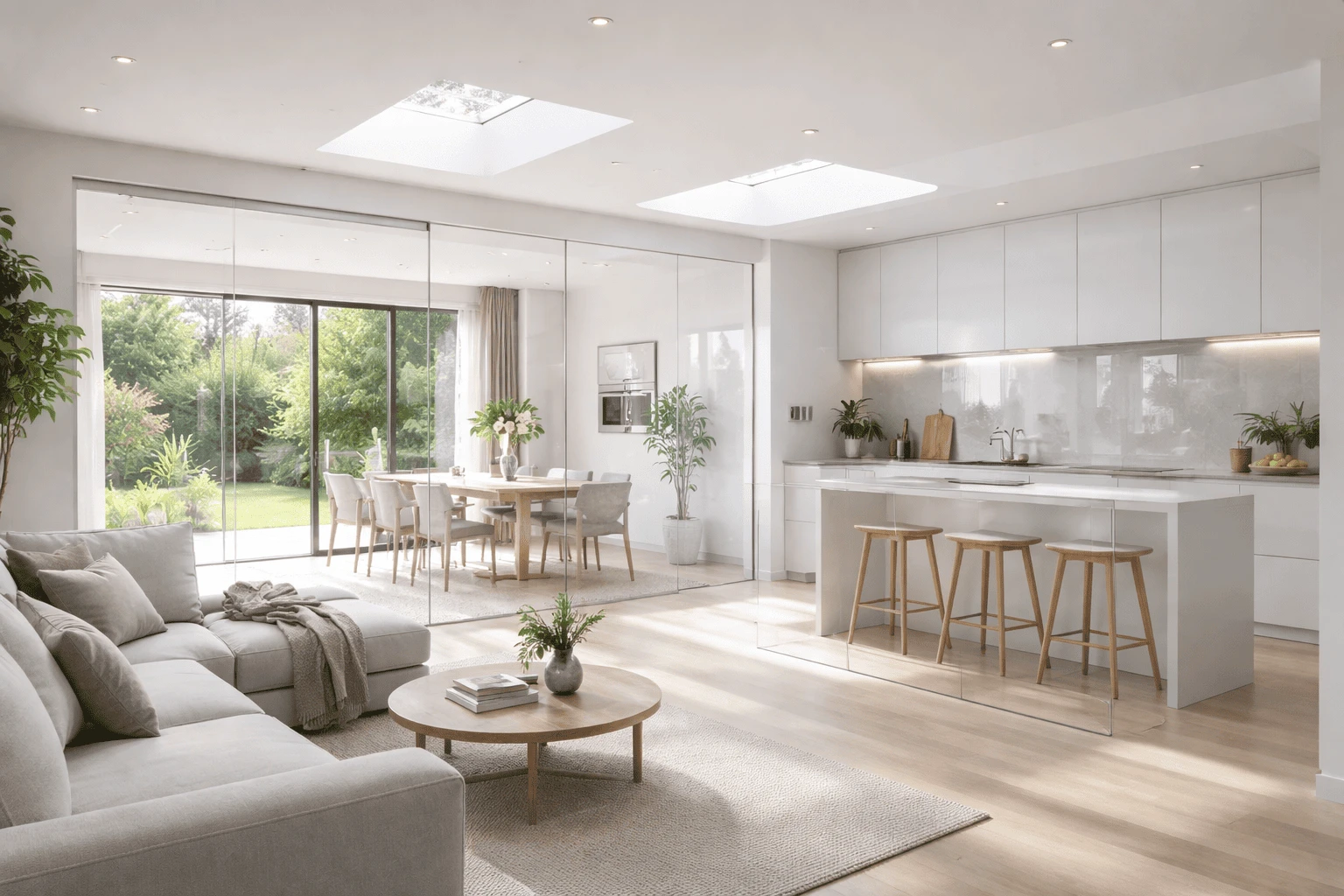
Natural light continues to be one of the most sought-after features in UK properties. Whether in urban townhouses or countryside extensions, homeowners want interiors that feel open, airy, and welcoming. Transparent materials allow light to flow through spaces, reducing reliance on artificial lighting and enhancing the sense of openness.
Acrylic sheets are particularly effective in achieving this effect. Their optical clarity enables bright interiors while being easier to install and safer than traditional glass. For example, clear acrylic panels can be used in partitions or protective features, adding light without adding structural complexity. Unlike glass, acrylic is significantly more impact-resistant, making it ideal for high-traffic areas or family homes. Open staircases, mezzanine features, and subtle room dividers can all benefit from acrylic’s balance of transparency and resilience.
Minimalist design remains a dominant trend in UK interiors. Clean lines, uninterrupted surfaces, and understated materials define contemporary living spaces. Acrylic complements this aesthetic with its smooth, polished finish and adaptability for bespoke requirements. Thinner acrylic sheets, for instance, can serve as shelving inserts, cabinet panels, or protective screens while maintaining an elegant appearance. Because acrylic is lighter than glass, installation is simpler, whether by professionals or DIY renovators. This combination of ease and visual appeal has helped it gain traction across a range of home improvement projects.
Non-standard property layouts demand materials that can be shaped and sized accurately. Acrylic’s adaptability makes it ideal for alcove shelving, desk protectors, or decorative panels. Acrylic Sheets function as a versatile material solution, supporting a range of thicknesses and applications in modern residential renovations.
Contemporary architecture often incorporates bold, transparent elements — from staircase panels to room dividers. Such installations require materials that can maintain clarity while providing structural reliability. Thicker acrylic sheets offer enhanced rigidity and impact resistance while retaining visual elegance.
Compared to traditional glazing, acrylic is less prone to dangerous shattering. If damaged, it tends to crack rather than break into sharp fragments, making it especially suitable for homes with children or pets. As building regulations and homeowner expectations increasingly prioritise safety, materials that combine design flexibility with robustness naturally gain appeal.
Modern British kitchens blend style with practicality. Surfaces must withstand moisture, heat fluctuations, and frequent cleaning while maintaining a refined appearance. Acrylic’s smooth, low-maintenance surface makes it an ideal alternative to tiles with grout lines, helping maintain seamless, light-reflective spaces. Lightweight acrylic panels also complement handleless cabinets and minimalist décor, creating kitchens that feel spacious and streamlined.
The surge in garden rooms and outdoor offices across the UK has reshaped residential architecture. These spaces require materials that transmit light effectively while coping with varying weather conditions. Mid-range acrylic panels can create bright enclosures without adding excessive structural strain. Their impact resistance makes them suitable for areas exposed to wind-blown debris or temperature changes. As outdoor living continues to influence home upgrades, materials that balance transparency with resilience remain highly sought after.
Rising renovation costs in the UK have led homeowners to weigh durability against expense. Glass, while visually appealing, can incur higher handling and installation costs due to its weight and fragility. Acrylic provides a practical alternative that often simplifies transportation and fitting without compromising on style. Search interest in terms like “acrylic sheets UK” and “perspex sheets UK” reflects this growing awareness. Homeowners are increasingly choosing materials that deliver aesthetic results alongside practicality.
Beyond cost, safety and durability remain central to material selection. Acrylic’s impact resistance supports busy family homes while maintaining clarity. Its range of thickness options allows for subtle protective layers or more substantial structural features, supporting diverse design needs. Additionally, durable materials like acrylic contribute to sustainability by reducing the need for frequent replacements, aligning with the broader trend towards responsible renovation.
Acrylic sheets are no longer just an alternative to glass; they now play a significant role in defining modern UK interiors. Their ability to enhance natural light, support bespoke designs, and improve safety makes them highly relevant in today’s home improvement landscape. As trends continue to prioritise open spaces, minimalist finishes, and functional solutions, acrylic remains well positioned across residential projects — from kitchens and partitions to garden extensions. Its versatility allows it to adapt to evolving design preferences while maintaining structural reliability. For those exploring contemporary materials and seeking more information, further insights can be found at primeplasts.uk.

A content writer and industry researcher focused on technology, digital transformation, and modern business trends. Writes data-driven, reader-friendly articles that break down complex topics into practical insights for global audiences.
When people plan a renovation, most of the excitement goes toward the big decisions: flooring, paint
17 September 2026
There's a particular kind of room that looks "finished" without you being able to say exactly why. O
7 September 2026
Every trade counter and builders' merchant has a section that's slightly harder to categorise than t
3 September 2026
Be the first to share your thoughts
No comments yet. Be the first to comment!
Share your thoughts and join the discussion below.
%20(1).webp&w=3840&q=75)


.webp&w=3840&q=75)
.webp&w=3840&q=75)


.webp&w=3840&q=75)

.webp&w=3840&q=75)