
.webp)
* All product/brand names, logos, and trademarks are property of their respective owners.
In home design, it’s often the small details that make the biggest impact. One element that is frequently overlooked is the door threshold. Far from being purely functional, a threshold shapes the flow between rooms, contributes to insulation, and influences durability over time. For homeowners looking to combine practicality with visual appeal, UPVC wood-effect door thresholds strike a balance between the two. They replicate the warmth and texture of timber while offering the resilience and low-maintenance benefits of UPVC. This makes them particularly well-suited for UK homes, where damp weather and daily wear can challenge traditional timber thresholds.
In this guide, we explore the reasons these thresholds are increasingly popular, highlighting their design versatility, weather resistance, and long-term performance.
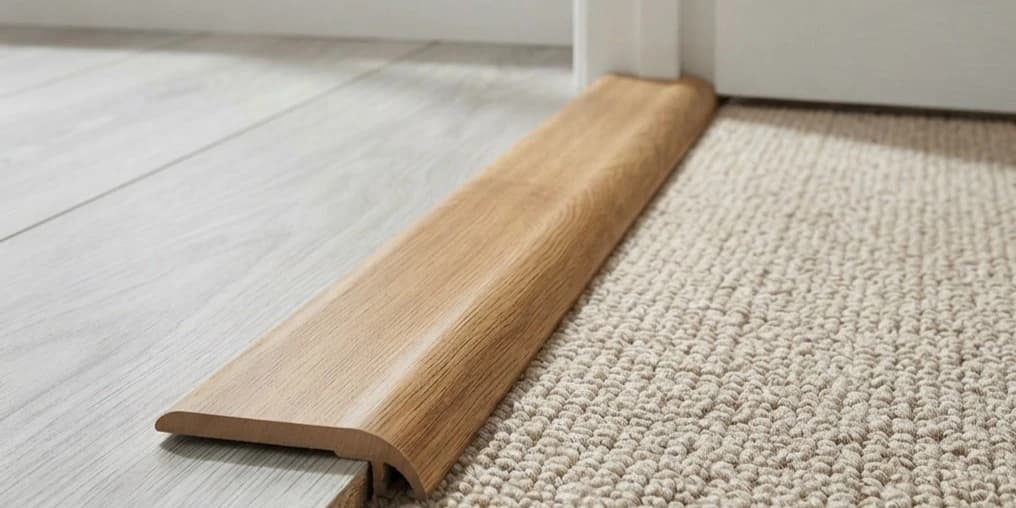
Door thresholds no longer need to disrupt the flow of your interiors with stark, metallic strips. UPVC wood-effect thresholds provide a subtle transition that complements a variety of flooring styles. They are available in realistic finishes such as rustic oak, walnut, and grey driftwood, enabling homeowners to match Scandi-inspired laminates, traditional parquet, or contemporary vinyl seamlessly.
The wood grain is printed directly onto the UPVC with high-definition precision. This ensures the visual warmth of timber without the constant upkeep, and the finish remains consistent under sunlight exposure, heavy foot traffic, or occasional spills. For households balancing aesthetics with practical maintenance, this is a clear advantage.
One of the defining features of wood-effect thresholds is their ability to integrate smoothly into multi-room layouts. Whether you are connecting a hallway to a living room or creating a cohesive open-plan kitchen, these profiles maintain clean lines and a polished look.
Unlike traditional metal strips that can appear intrusive, UPVC wood-effect thresholds blend into the flooring, preserving the continuity of design. This is especially useful in period properties, where maintaining a timber aesthetic is important but modern durability is required.
The UK’s climate is famously unpredictable. Timber thresholds, while attractive, are prone to warping, swelling, and rot when exposed to moisture, especially in high-traffic areas or exterior entrances.
UPVC wood-effect thresholds are inherently moisture-resistant and unaffected by temperature fluctuations. Homes in coastal regions or countryside locations benefit from thresholds that remain solid, sealed, and slip-resistant year-round. Unlike timber, they do not require annual sanding, sealing, or staining, which reduces the risk of mould, discolouration, and structural deterioration. This durability makes them particularly suitable for porches, utility rooms, conservatories, and interior-to-exterior transitions where moisture ingress and heat loss are common concerns.
Real timber can look stunning, but it demands attention. Exposure to wet shoes, pets, and the UK’s variable weather accelerates wear. UPVC thresholds, by contrast, are almost maintenance-free.
A simple wipe with a damp cloth keeps them looking fresh, and they do not absorb water, swell, or peel. Over time, this translates into a lower cost of ownership, as there is no need for varnish, repairs, or early replacement. The durability and ease of care make them a practical solution for modern UK households.
To understand the practical advantages, it helps to compare UPVC thresholds with other common materials:
| Feature | UPVC Wood Effect | Solid Timber | Aluminium |
|---|---|---|---|
| Water Resistance | 10 | 2 | 4 |
| Durability in UK Climate | 9 | 2 | 3 |
| Aesthetic Range | 9 | 9 | 9 |
| Maintenance Required | 3 | 9 | 4 |
| Installation Ease | 9 | 4 | 4 |
| Long-Term Cost Effectiveness | 10 | 4 | 4 |
UPVC thresholds strike a balance between visual appeal, climate resilience, and minimal upkeep. For homeowners prioritizing low maintenance without compromising style, they consistently outperform timber and aluminium alternatives.
UPVC thresholds offer a combination of visual appeal, weather resistance, and relatively low maintenance. They are available in a variety of profiles and finishes, making them suitable for different flooring types and room styles.
Modern family homes: Handle high-traffic areas, pets, and regular cleaning.
Period properties: Maintain a timber aesthetic without seasonal upkeep.
Flats and new builds: Low-profile options that install easily across different floor types.
James and Ellie renovated their mid-terrace Leeds home, installing laminate flooring throughout the ground floor. The old aluminium threshold was scratched, loose, and allowed cold draughts to seep through. It also posed a trip hazard for their toddler.
After selecting a UPVC wood-effect threshold in rustic oak, installation was quick and straightforward. The result was a seamless transition between rooms, improved insulation, and no ongoing maintenance. A year later, it still looks pristine, demonstrating the material’s resilience and ease of care.
Many UPVC thresholds are available in self-adhesive form, while others use screws for added stability. Both options are easy to install with basic tools such as a saw and a tape measure, making them accessible for DIY projects.
These thresholds accommodate:
Flat floor transitions (laminate to laminate)
Height differences (tile to carpet using ramp profiles)
Expansion joints (floating floor transitions)
They combine flexibility with a polished finish, fitting almost any interior flooring plan without disrupting design continuity.
A few examples of home upgrades:
Brighton: A dull brass strip replaced with a grey driftwood UPVC threshold for visual harmony.
Bristol: Rich walnut threshold transformed a vinyl floor transition.
Norwich: A waterproof UPVC profile completed a newly tiled bathroom floor.
Pairing thresholds with flooring is simple:
Grey oak laminate → Grey wood effect threshold
Natural parquet → Rustic oak finish
Engineered wood → Walnut or golden pine tones
These examples demonstrate how thresholds, though small, influence the overall cohesion of a room.
Door thresholds play a crucial role in facilitating smooth transitions between rooms, providing insulation, and ensuring long-term durability. UPVC wood-effect thresholds combine design versatility with weather resistance and low maintenance, making them suitable for a variety of UK homes—from urban flats to country cottages. Choosing thresholds that strike a balance between style and performance can reduce maintenance, maintain continuity with the flooring, and enhance comfort. Small design details like these often have a disproportionate impact on the overall feel and functionality of a home.
When people plan a renovation, most of the excitement goes toward the big decisions: flooring, paint
17 September 2026
There's a particular kind of room that looks "finished" without you being able to say exactly why. O
7 September 2026
Every trade counter and builders' merchant has a section that's slightly harder to categorise than t
3 September 2026
Be the first to share your thoughts
No comments yet. Be the first to comment!
Share your thoughts and join the discussion below.

%20(1).webp&w=3840&q=75)


.webp&w=3840&q=75)
.webp&w=3840&q=75)

.webp&w=3840&q=75)

.webp&w=3840&q=75)