* All product/brand names, logos, and trademarks are property of their respective owners.
There's a particular kind of room that looks "finished" without you being able to say exactly why. Often it's not the big furniture choices doing the work — it's the smaller junctions. The point where the flooring meets the doorway. The edge of a shelf. The line where one room's flooring gives way to another's. Get those right and everything else feels more considered by association.
This is where wood-effect door thresholds, floor edging trim, and furniture panel edge trim earn their place in a design scheme, not just as functional fixes but as finishing details in their own right. If you want to explore various options and styles before starting your project, you can easily browse the range at DoorThresholds.co.uk to find a profile that matches your vision.
Most interior schemes are planned room by room — a colour palette here, a flooring choice there. The doorway between them is often where planning stops. Yet it's one of the most visually active parts of a home, since it's where two sets of choices meet and either agree with each other or don't.
The same goes for furniture. A run of fitted shelving or a piece of flat-pack storage can look sharp from a distance, but a raw or mismatched panel edge up close undoes some of that polish. Treating these transition points as part of the design brief, rather than an installation afterthought, is what separates a coordinated interior from one that simply has nice individual pieces in it.
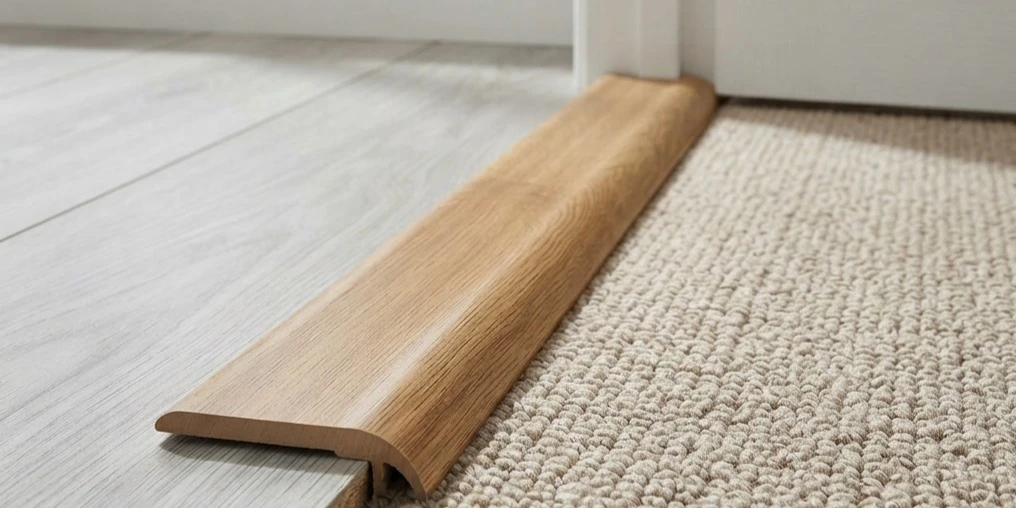
If your flooring has a warm oak or walnut tone, a UPVC Wood Effect Door Threshold in a similar tone helps the doorway read as a continuation of the floor rather than an interruption. The aim isn't necessarily an exact match — it's avoiding a jarring contrast that draws the eye to the junction rather than the room.
A UPVC Door Edging Floor Trim running along the edge of laminate or wood-look flooring can be styled as a deliberate line rather than a hidden necessity — particularly where flooring meets carpet or tile in an open-plan layout. Thinking of it as part of the floor's visual "frame" changes how it reads in the finished room.
Wood-effect trims tend to sit most comfortably in a scheme when they're considered alongside skirting boards and door colours, rather than chosen in isolation. A threshold that leans warmer or cooler than the surrounding woodwork can look slightly out of step, even if the difference is subtle.
Fitted or freestanding furniture with melamine panels benefits from the same attention. A U-Section PVC Melamine Furniture Panel Edge Trim covers the raw board edge, and choosing a finish that complements the panel colour keeps shelving, cabinets, and storage looking deliberately designed rather than simply assembled.
Achieving a seamless, professional look requires careful planning before you begin cutting or fixing materials into place. Taking a methodical approach ensures your finished project looks intentional rather than improvised:
If you're weighing up finishes and want to compare wood-effect tones and profiles side by side, visit https://www.doorthresholds.co.uk/collection/upvc-door-thresholds as a practical starting point for narrowing down your options before you commit to buying.
A door threshold is specifically designed to bridge the gap directly underneath a door between two rooms or flooring types, managing height differences and foot traffic. A floor edging trim, on the other hand, is generally used along the perimeter of a floor covering where it meets a different type of flooring like a carpet edge.
Yes. Unlike solid wood, UPVC is moisture-resistant and will not warp, swell, or rot when exposed to damp environments like bathrooms or splash-prone areas in kitchens, making it a low-maintenance and durable choice.
You don't necessarily need an exact factory match. Instead, focus on matching the undertone and the general grain depth. A complementary tone ensures the junction blends smoothly into your overall interior design scheme rather than creating a distracting contrast.
None of these details will transform a room on their own, and that's rather the point — they're not meant to be the star of the show. Their primary job is to disappear into the background scheme, smoothing over the joins so the rest of your design choices get to do the talking.
A well-chosen threshold, a clean edging trim, and neatly finished furniture edges are the kinds of subtle elements that elevate a house into a truly cohesive home. They provide that unspoken sense of quality that most visitors won't consciously notice, which, in professional interior design, is often exactly the kind of quiet, understated compliment you're striving for.

Buying a condo can be an exciting step toward homeownership, whether you're purchasing your first pr
2 October 2026
A home elevator can make everyday movement between floors more convenient, especially in multi-store
25 September 2026
When people plan a renovation, most of the excitement goes toward the big decisions: flooring, paint
17 September 2026
Be the first to share your thoughts
No comments yet. Be the first to comment!
Share your thoughts and join the discussion below.


%20(1).webp&w=3840&q=75)
.webp&w=3840&q=75)

.webp&w=3840&q=75)