
* All product/brand names, logos, and trademarks are property of their respective owners.
Rubber is rarely the headline material in construction or manufacturing discussions, yet it plays a foundational role in how modern environments function safely and efficiently. From large-scale industrial sites to domestic renovation projects, rubber-based solutions are widely used to address everyday challenges such as slip risks, impact absorption, vibration control, and long-term surface protection.
Across the UK, rubber products have become increasingly common in both professional and residential settings. Construction firms rely on them for durability and safety compliance, manufacturers value their resilience under constant stress, and homeowners turn to rubber flooring and matting for practical upgrades in garages, workshops, and utility spaces. The appeal lies in performance rather than appearance—rubber performs consistently in demanding conditions where other materials often fall short.
This guide explores why rubber products matter across construction, industry, and manufacturing, while also showing how the same principles apply to home improvement projects. By understanding where and how rubber is used, UK professionals and homeowners alike can make informed decisions about safety, comfort, and long-term functionality.
In construction environments, materials must cope with constant movement, variable weather, and heavy equipment. Rubber’s physical properties—flexibility, grip, and resistance to wear—make it particularly well suited to these conditions. Rather than serving a purely structural role, rubber often supports safety, accessibility, and durability across active worksites.
Rubber has long been used in construction for sealing joints, absorbing movement between materials, and preventing water ingress. These applications help protect structures from long-term damage caused by moisture or vibration. Beyond these traditional uses, rubber surfaces are increasingly applied underfoot to improve site safety and working conditions.
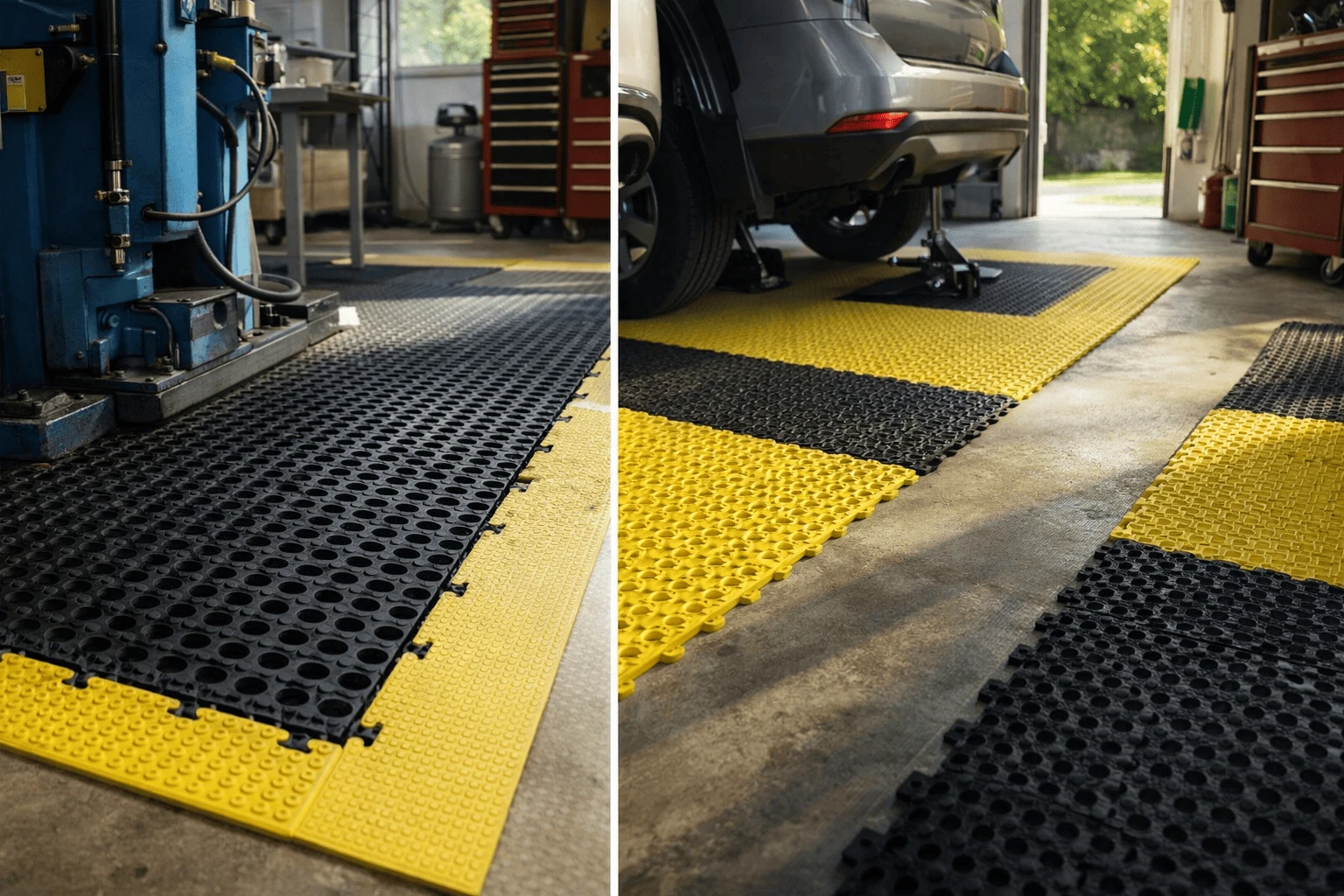
On active construction sites, rubber matting is often used to define walkways, stabilise temporary work areas, and reduce slip risks in wet or uneven conditions. High-visibility mats can help guide foot traffic, while cushioned surfaces reduce impact when tools or materials are dropped. In many of these scenarios, rubber products are selected because they provide consistent performance under changing site conditions without requiring complex installation or structural changes. These uses are functional rather than aesthetic, supporting safer workflows while keeping site layouts flexible.
The same qualities that make rubber suitable for construction sites also translate well into home renovation projects. Garages, sheds, and garden workshops often experience temperature changes, moisture exposure, and mechanical wear—conditions where standard flooring can degrade quickly. Rubber floor tiles and mats help manage these stresses by offering durability, grip, and ease of maintenance in multi-use domestic spaces.
Industrial and manufacturing environments place constant demands on materials. Floors, walkways, and workstations must support long hours of use while meeting safety and compliance standards. Rubber products play a quiet but essential role in maintaining these conditions across UK factories and production facilities.
Slip resistance and fatigue reduction are two major considerations in industrial spaces. Rubber flooring and matting help address both by providing consistent traction and shock absorption underfoot. This is particularly relevant in areas where liquids, dust, or static electricity pose additional risks.
Many factories use colour-coded or high-contrast rubber surfaces to mark hazard zones and operational pathways. Anti-static rubber mats are also common in electronics or precision manufacturing environments, where electrostatic discharge can damage equipment. In workstations that require prolonged standing, cushioned rubber runners help reduce physical strain, supporting worker comfort without altering workflow layouts.
Rubber materials used in industrial environments are designed to tolerate heavy foot traffic, repeated equipment movement, and ongoing environmental stress. These characteristics allow rubber surfaces to maintain performance over time, particularly in facilities where durability and consistent underfoot conditions are essential. As a result, rubber is often selected for areas that experience sustained operational pressure rather than intermittent use.
Beyond flooring, rubber is integrated into machinery systems through components such as gaskets, seals, hoses, and vibration dampers. These elements help reduce wear on mechanical parts, manage noise levels, and improve operational stability.
The areas surrounding machinery are just as important. Rubber matting placed around equipment creates stable, shock-absorbing zones for operators, helping reduce fatigue and minor impact injuries. Defined rubber surfaces can also assist with workflow organisation by clearly separating operational areas, walkways, and storage zones. In this way, rubber supports both mechanical performance and human factors within manufacturing environments.
While rubber is often associated with industrial settings, its practical benefits have made it increasingly popular in domestic spaces. UK homeowners are using rubber products to improve safety, comfort, and durability in areas that experience frequent use or environmental exposure.
Entranceways are a common starting point. Rubber entrance mats help trap dirt and moisture before it reaches interior floors, reducing cleaning demands and slip risks. Their weather-resistant properties make them suitable for year-round use, particularly in homes exposed to frequent rain or muddy conditions. Inside the home, rubber matting is often used in utility rooms, conservatories, and laundry areas where water spills are more likely. In garages and home workshops, textured rubber mats provide grip underfoot while protecting the underlying floor from tools, equipment, and vehicles. These applications focus on practicality rather than aesthetics, prioritising function and ease of upkeep.
Selecting the appropriate rubber product depends largely on the environment and intended use. Areas exposed to moisture benefit from mats with drainage features or raised textures that allow water to disperse. Spaces involving long periods of standing may require thicker, cushioned surfaces to reduce fatigue. Rubber matting rolls are often chosen for their flexibility, as they can be cut to size and adapted to irregular spaces such as sheds, vans, or storage rooms. By considering factors such as slip resistance, thickness, and surface texture, homeowners can match rubber products to specific household needs without unnecessary complexity.
Rubber products play a supporting role across construction, industry, and home improvement by addressing everyday challenges related to safety, comfort, and durability. Rather than acting as a primary structural material, rubber enhances how spaces function—reducing risks, absorbing impact, and withstanding conditions that cause other surfaces to degrade.
In construction, rubber contributes to safer underfoot conditions and improved site organisation. In industrial settings, it supports compliance, efficiency, and worker well-being. Within the home, rubber offers practical solutions for spaces that demand resilience and low maintenance. Across all these environments, its value lies in consistent performance rather than visibility.
Understanding where and how rubber is used allows professionals and homeowners to approach flooring and surface decisions with clarity. By focusing on application-specific requirements, rubber can be integrated thoughtfully into projects of any scale, supporting long-term usability without unnecessary complexity. Further Reading: The additional information on rubber flooring and matting applications across different environments can be found at therubbermats.uk.

Evan is a UK-based writer and industry enthusiast covering home improvement, construction, and lifestyle trends. With a keen eye for practical solutions and emerging innovations, he delivers insights that inform and inspire readers.
When people plan a renovation, most of the excitement goes toward the big decisions: flooring, paint
17 September 2026
There's a particular kind of room that looks "finished" without you being able to say exactly why. O
7 September 2026
Every trade counter and builders' merchant has a section that's slightly harder to categorise than t
3 September 2026
Be the first to share your thoughts
No comments yet. Be the first to comment!
Share your thoughts and join the discussion below.
%20(1).webp&w=3840&q=75)

.webp&w=3840&q=75)
.webp&w=3840&q=75)


.webp&w=3840&q=75)

.webp&w=3840&q=75)