* All product/brand names, logos, and trademarks are property of their respective owners.
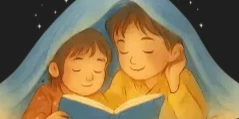
There is something special about the moment a child becomes completely absorbed in a story.
Maybe they are sitting under a blanket, wondering what made that strange sound outside the window. Maybe they are following a young detective who has just discovered a mysterious key. Or perhaps they are imagining what life was like for a child living hundreds of years ago.
For children aged 6–8, stories can turn ordinary reading time into an exciting adventure. Scary stories for kids aged 6–8, mystery stories for kids aged 6–8, and historical fiction for kids aged 6–8 each offer a different kind of experience while helping children develop imagination, curiosity, and a lasting love of books.
As someone who has always loved books, I think this age is particularly exciting. Children are beginning to read more independently, but they still enjoy the magic of being transported somewhere completely different.
That is where a children's reading platform such as LitsLib can make story discovery more enjoyable.
Children between six and eight are asking questions all the time.
Why did that happen? Who lives there? What would happen if...? Was life really like that?
Good stories give those questions somewhere to go.
A child reading about a detective solving a mystery learns to look for clues. A child reading historical fiction begins to understand that people lived differently in the past. A carefully written scary story teaches children how to experience suspense while still feeling safe.
Reading also helps children build:
The best part is that children do not have to feel as though they are studying. They are simply enjoying a story.
When parents hear the words "scary stories," they may immediately worry about nightmares.
That is understandable. But not every scary story is designed to terrify a child.
For children aged 6–8, the best scary stories usually focus on mild suspense, strange situations, playful surprises, and imaginative mysteries rather than disturbing scenes.
Think about a story where a child hears footsteps in an empty hallway.
The reader wonders, "Who is there?"
The character slowly opens the door.
And then—perhaps—a friendly cat jumps out.
That moment of suspense can be thrilling without becoming genuinely frightening.
A suitable scary story might include:
The goal is to create excitement while keeping the experience comfortable for young readers.
One practical tip for parents is to let children choose their comfort level. If a story feels too frightening, there is no need to finish it. Reading should remain something children look forward to.
Mystery stories are wonderful for children who love asking questions.
Imagine a story beginning with a missing lunchbox at school. Three children were near the classroom. There is a muddy footprint beside the desk. A strange note has been found inside a book.
Suddenly, the reader becomes part of the investigation.
Who took the lunchbox?
Where did the footprint come from?
What does the note mean?
This is one reason mystery stories for kids aged 6–8 can be so engaging. Children are not simply watching the story happen. They are trying to solve it alongside the characters.
A good children's mystery encourages readers to:
These are useful skills far beyond reading.
You can even make mystery reading interactive. After a few pages, stop and ask your child, "Who do you think did it?" Then ask why.
There does not need to be a correct answer yet. The fun is in making the prediction.
Historical fiction gives children something that a history textbook sometimes cannot: a personal connection with the past.
Instead of simply learning that people once travelled by horse and carriage, children can follow a character who wakes up in a busy town where horses fill the streets.
Instead of memorising that families once lived without modern technology, they can read about a child writing a letter to a friend because there is no smartphone or computer.
Suddenly, history feels real.
Historical fiction for kids aged 6–8 can introduce children to different time periods, cultures, traditions, inventions, and everyday experiences in an approachable way.
Children can learn about:
The key is to keep the story enjoyable.
A young reader does not need a long lecture about history. A character with a problem, a goal, and an interesting adventure can naturally introduce historical details.
Scary stories, mysteries, and historical fiction may seem completely different, but they share an important quality: they make children curious.
A scary story asks:
A mystery asks:
Historical fiction asks:
Each question encourages the child to keep reading.
That curiosity is one of the strongest foundations for developing lifelong reading habits.
This is where LitsLib can become a useful destination for young readers and families.
A children's reading library should not simply provide stories. It should help readers discover stories that match their interests and reading stages.
For children aged 6–8, having different genres available means one child can move from a funny adventure to a mystery, while another can explore fantasy, science fiction, friendship, scary stories, or historical fiction.
This variety matters because children do not all fall in love with books in the same way.
One child may discover reading through a detective story.
Another may become fascinated by ghosts.
Someone else may love stories about children from the past.
The important thing is finding that first story that makes them say, "Can I read another one?"
You do not need an elaborate reading routine.
Small habits can make a big difference.
A chair, cushion, blanket, and a small collection of books can turn reading into something children associate with comfort.
If your child keeps selecting mysteries instead of the historical books you picked, let them enjoy the mysteries.
Choice creates ownership.
Instead of turning reading into a test, ask natural questions:
When selecting stories for a six- to eight-year-old, consider more than the genre.
Look for stories with:
Most importantly, pay attention to the individual child.
Two children of the same age can have completely different reading preferences and emotional comfort levels.
A child who loves spooky stories may happily read about a mysterious haunted library, while another may prefer a gentle mystery involving a missing teddy bear.
Both are perfectly good ways to enjoy reading.
For children aged 6–8, reading should feel like an invitation to explore.
Scary stories for kids aged 6–8 can introduce gentle suspense and excitement. Mystery stories for kids aged 6–8 can encourage observation and problem-solving. Historical fiction for kids aged 6–8 can help young readers imagine how people lived in another time.
Together, these genres offer much more than entertainment. They give children opportunities to ask questions, make predictions, understand different experiences, and develop a deeper relationship with books.
That is why I believe platforms such as LitsLib can be valuable for families looking for fresh stories and new reading adventures.
Sometimes, all it takes is one memorable story.
A mysterious clue.
A creaking door.
An old photograph.
A secret from the past.
And suddenly, a child who was reluctant to read is asking for one more chapter.

No bio available yet.
Robotics is changing how students understand technology. It combines programming, engineering, elect
26 August 2026
Be the first to share your thoughts
No comments yet. Be the first to comment!
Share your thoughts and join the discussion below.