.webp)
* All product/brand names, logos, and trademarks are property of their respective owners.
A renovation budget tends to go on the visible headline items — new flooring, a fitted kitchen, freshly plastered walls — while the narrow strips of metal or timber at the edges get treated as an afterthought. That's a mistake. These small components are frequently what decides whether a finished room looks professional or slightly unresolved. A well-chosen trim protects vulnerable edges, disguises awkward joints, and adds a quiet but noticeable layer of polish. Leave it out, or pick the wrong one, and even premium materials can end up looking unfinished.
This guide sets out the main categories of bars and edging profiles used across UK homes and building projects, explains where each one earns its keep, and offers a framework for choosing between them.
At their simplest, bars, trims and edging profiles are narrow strips of material — metal, timber or composite — used to finish, protect or join two surfaces at their meeting point.
Three jobs come up again and again:
You'll find these profiles doing all three jobs across bathrooms, kitchens, flooring thresholds, worktops, furniture and door surrounds. Which one suits a given job depends mainly on the surfaces involved, how much traffic or moisture the area sees, and the finish you're aiming for.
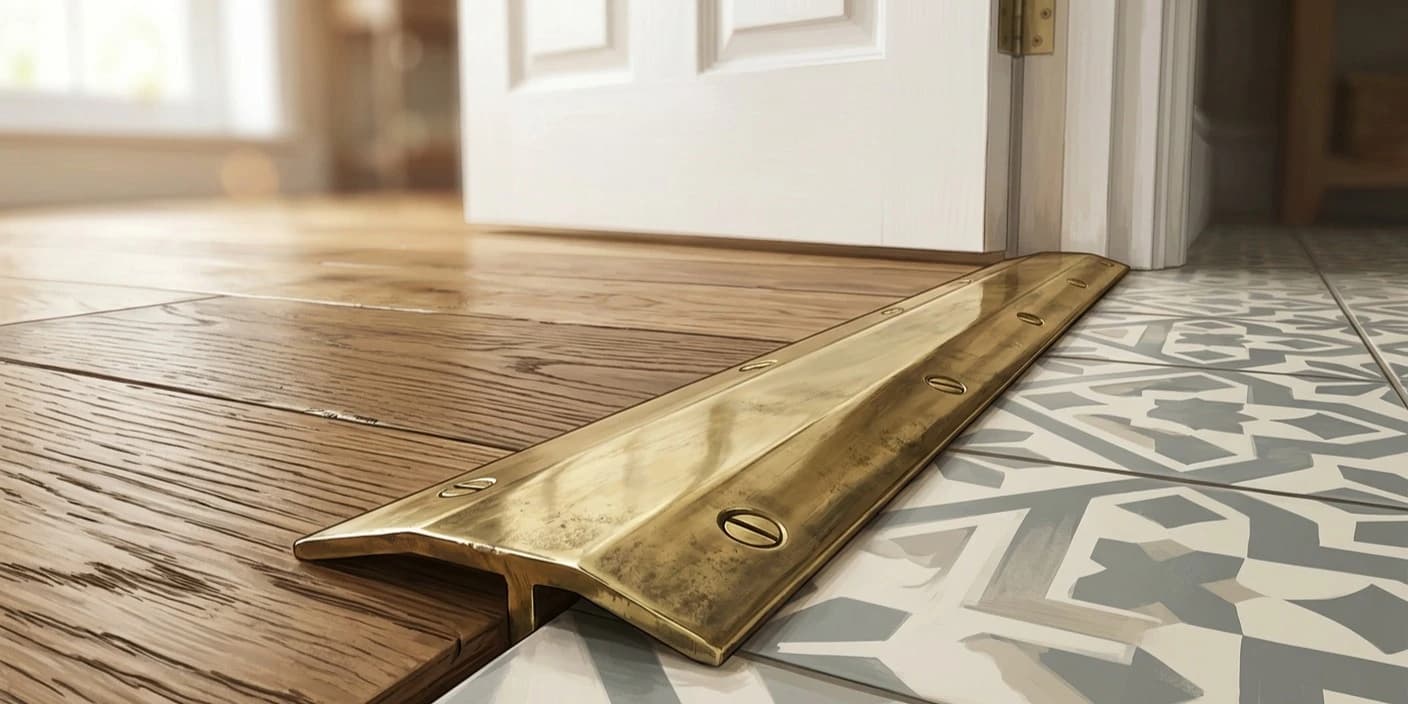
Flat bar trims are a simple, flat-profile strip — no groove, lip or moulding, just a clean band of material. Common materials include aluminium, stainless steel, brass and PVC, each suited to slightly different projects.
Metal flat bars tend to appear where durability is the priority: capping the exposed edge of a worktop, running along the front of a shelf, or forming a simple threshold strip between two rooms. A stainless steel flat bar along a kitchen worktop edge, for instance, shrugs off knocks and moisture in a way a raw edge never could.
Timber flat bars serve a different purpose. Because they can be finished to match surrounding joinery, they work well on panelled walls, shelving units and furniture where blending in matters more than standing out.
Precisely because the profile is plain, flat bar trims read as neat and deliberate rather than decorative — useful when you want a clean line without drawing attention to it.
Exposed tile edges are sharp, prone to chipping, and liable to trap moisture at the joint if left bare. Tile trim solves all three problems by capping the raw edge with a rounded or square profile, typically in aluminium, PVC or stainless steel.
Where you'll typically see it:
| Location | Why it's used |
|---|---|
| Bathroom walls and shower enclosures | Finishes tiling around windows or where it meets external corners |
| Kitchen splashbacks | Protects the edge where tiling stops short of a worktop or cabinet |
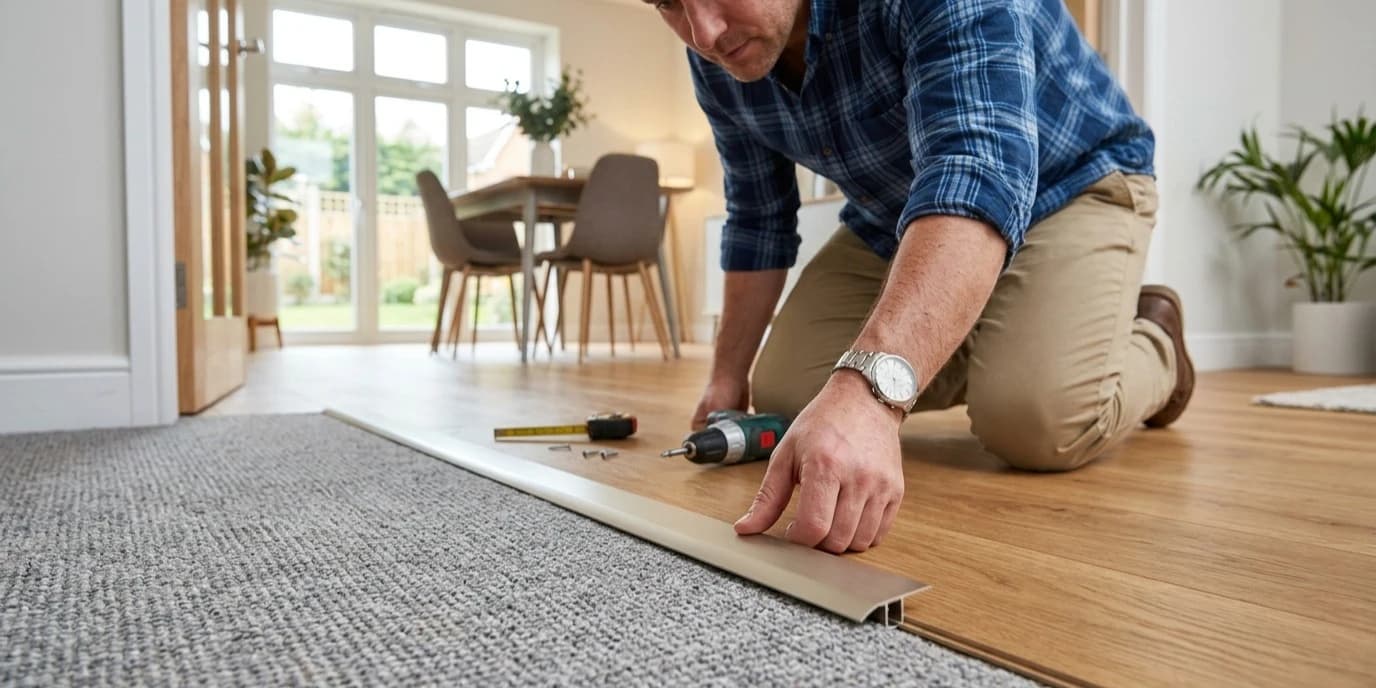
| Floor-to-floor transitions | Provides a strong, moisture-resistant edge between tile and carpet, laminate or another tile |
| External corners | Prevents chipping where two tiled walls meet at 90 degrees |
Beyond the protective function, tile trim also gives a considerably sharper visual finish than sealant or grout alone — which is why it's standard practice on most professionally tiled jobs, not just an optional extra.
Timber edging brings warmth and a traditional character that metal profiles can't quite replicate, and it's a natural fit wherever a matching or contrasting wood tone is part of the design brief.
Typical uses include:
Flooring transitions are a particular focus for timber edging, since a solid wood or veneered strip is one of the most durable ways to finish a floor where it meets a wall, doorway or step.https://www.stairsnosing.co.uk/ stock a useful range of timber and wood-effect profiles designed specifically for these transition points.
One practical note: solid timber can expand and contract in humid environments, so sealed or laminated options tend to hold up better in kitchens and bathrooms than untreated wood.
What they are: solid or hollow profiles with an even, square cross-section, available in metal (aluminium, mild steel, stainless steel) or timber.
Why they're popular: their versatility. A square bar can act as a structural edging element, a decorative accent, or a functional support, depending entirely on how it's installed.
Common applications:
What to check before buying: dimensions matter more than they first appear. Too thin, and a bar can look flimsy or fail to protect the edge properly; too thick, and it can dominate a design meant to be understated. Finish is worth equal attention — brushed or polished stainless steel suits a contemporary scheme, while a powder-coated or painted bar can be matched to a wider colour palette.
Architraves surround door frames — and sometimes windows — covering the gap between the frame and the surrounding plaster. That's their practical job, but they also shape the character of a room more than most people realise: a plain, modern ogee profile creates a very different impression to a bold, period-style moulding.
Other finishing trims do similar work elsewhere:
Skirting boards hide the join between wall and floor. Scotia and quadrant mouldings finish the edge where flooring meets skirting. Cover strips bridge expansion gaps across larger flooring installations.
In every case, the trim is doing two things simultaneously — concealing an imperfect joint and adding a considered, finished look. When architraves and finishing trims are kept consistent in style and proportion throughout a property, the result feels noticeably more cohesive, even if most people couldn't explain exactly why.
Rather than working through material types alone, it helps to ask a short sequence of questions:
Bathrooms, kitchens and utility areas need moisture-resistant materials — metal or treated timber. Dry living spaces give you more freedom, including untreated wood.
The trim's depth and profile need to suit the thickness of whatever it's joining, particularly at transitions between flooring types of different heights.
Polished, brushed, matt or painted finishes each create a different effect — ideally one that echoes existing taps, door furniture or fixtures nearby.
A decorative trim on a feature wall has very different requirements to a structural trim protecting a stair nosing or worktop edge.
Installation methods vary by product — screwing a metal threshold strip into place, bedding a tile trim in during tiling, or pinning and filling a timber architrave — but a few maintenance points apply broadly:
Clean metal trims and tile trim joints regularly with non-abrasive products to stop grime building up.
Bars and edging profiles rarely get top billing in a project, but their impact is out of proportion to their size. Choosing the right flat bar, tile trim, timber edging, square bar or architrave — matched carefully to material, environment and expected wear — protects the surfaces around it and gives the finished project a genuinely professional appearance. It's a small amount of extra thought that pays off in both looks and longevity.

Anyone who has renovated a room in a UK home knows that the trickiest part often isn't the flooring
9 September 2026
Walk into most UK homes, and you'll find at least one spot where two different floors meet awkwardly
4 September 2026
When completing a home renovation or simply updating the flooring in a single room, attention to det
4 September 2026
Be the first to share your thoughts
No comments yet. Be the first to comment!
Share your thoughts and join the discussion below.
.webp&w=3840&q=75)
.webp&w=3840&q=75)

.webp&w=3840&q=75)