.webp)
* All product/brand names, logos, and trademarks are property of their respective owners.
Anyone who has renovated a room in a UK home knows that the trickiest part often isn't the flooring itself; it's where two different floors meet. The gap between a laminate kitchen floor and a carpeted hallway, or between vinyl and wood, can look untidy, trap dirt, or even become a trip hazard if left unfinished.
This is where self-adhesive door thresholds come in. They're a simple, effective way to bridge the gap between flooring types, protect exposed edges, and give doorways a clean, professional finish, all without the need for extensive tools or joinery skills.
In this guide, we'll explain what self-adhesive door thresholds are, where they're used, the different types available, and how to choose and fit the right one for your home.
A self-adhesive door threshold is a strip of flooring trim, usually made from aluminium, PVC, or a wood-effect laminate, that sits in a doorway or at the junction between two floor surfaces. Unlike traditional thresholds that require screws or specialist fixings, these come with a pre-applied adhesive backing, so they can be pressed directly onto a clean, dry subfloor.
They serve several practical purposes:
Because they don't rely on drilling or screwing into the floor, self-adhesive thresholds have become a popular choice for renters, landlords, and DIY renovators who want a tidy finish without permanent fixings.
There are several reasons self-adhesive door thresholds have become a go-to solution for both professionals and DIYers:
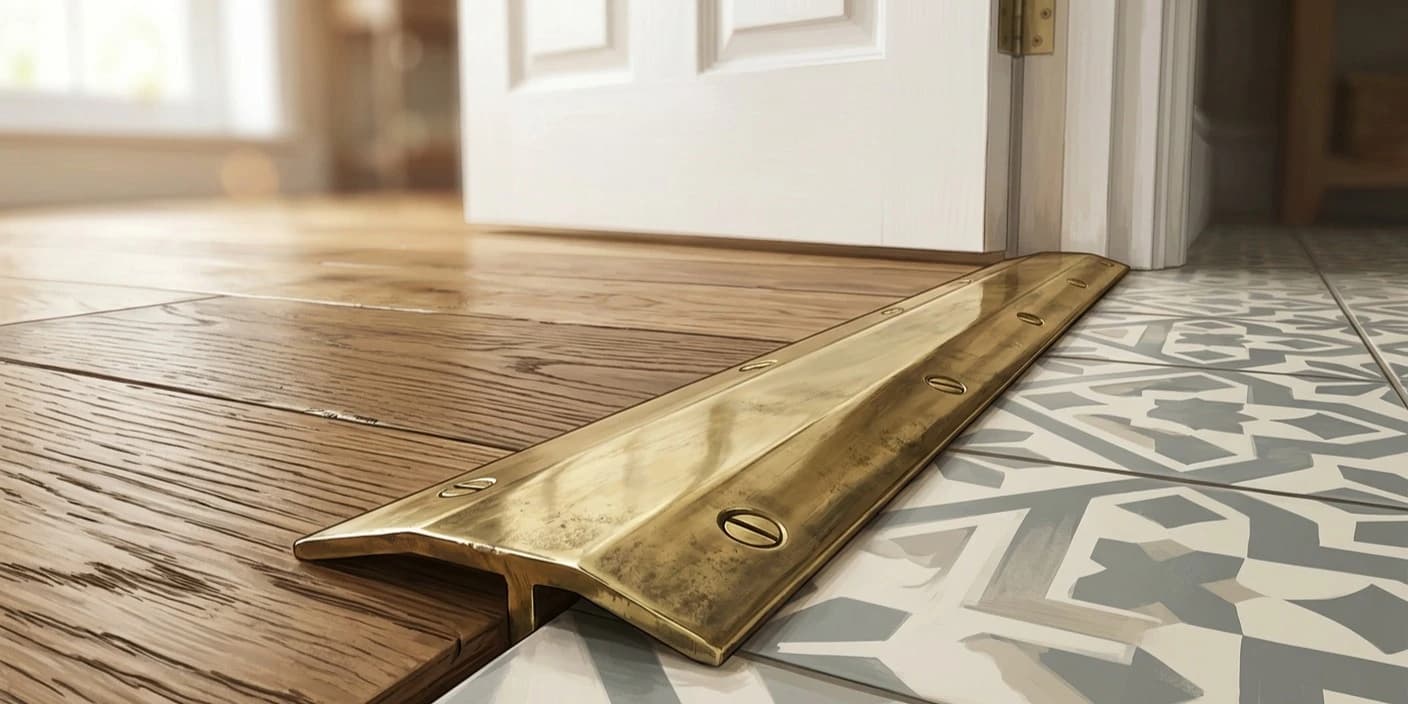
An Aluminium Door Threshold is one of the most popular choices for busy doorways, particularly in kitchens, hallways, and commercial spaces. Aluminium threshold profiles are valued for their durability and slim, unobtrusive appearance.
They typically come in a range of finishes, including brushed silver, gold, and bronze effect, allowing them to complement modern kitchens or more traditional interiors. Because aluminium is hard-wearing and resistant to moisture, these door threshold strips cope well with high footfall areas and are a sensible option anywhere flooring meets an exterior door or a frequently used internal doorway.
Aluminium threshold profiles are also relatively slim, which makes them useful where there's only a small height difference between two floor surfaces, such as tile to vinyl or laminate to stone.
For homes where flooring includes engineered wood, laminate, or luxury vinyl planks, wood effect self-adhesive door thresholds offer a more seamless, decorative option than plain aluminium. These strips are designed to visually match or complement timber-look flooring, helping the transition between rooms feel intentional rather than obviously "added on." They're a good choice when:
Because they're self-adhesive, wood effect thresholds can usually be fitted without disturbing the surrounding flooring, which is particularly useful when working around fitted skirting or door frames.
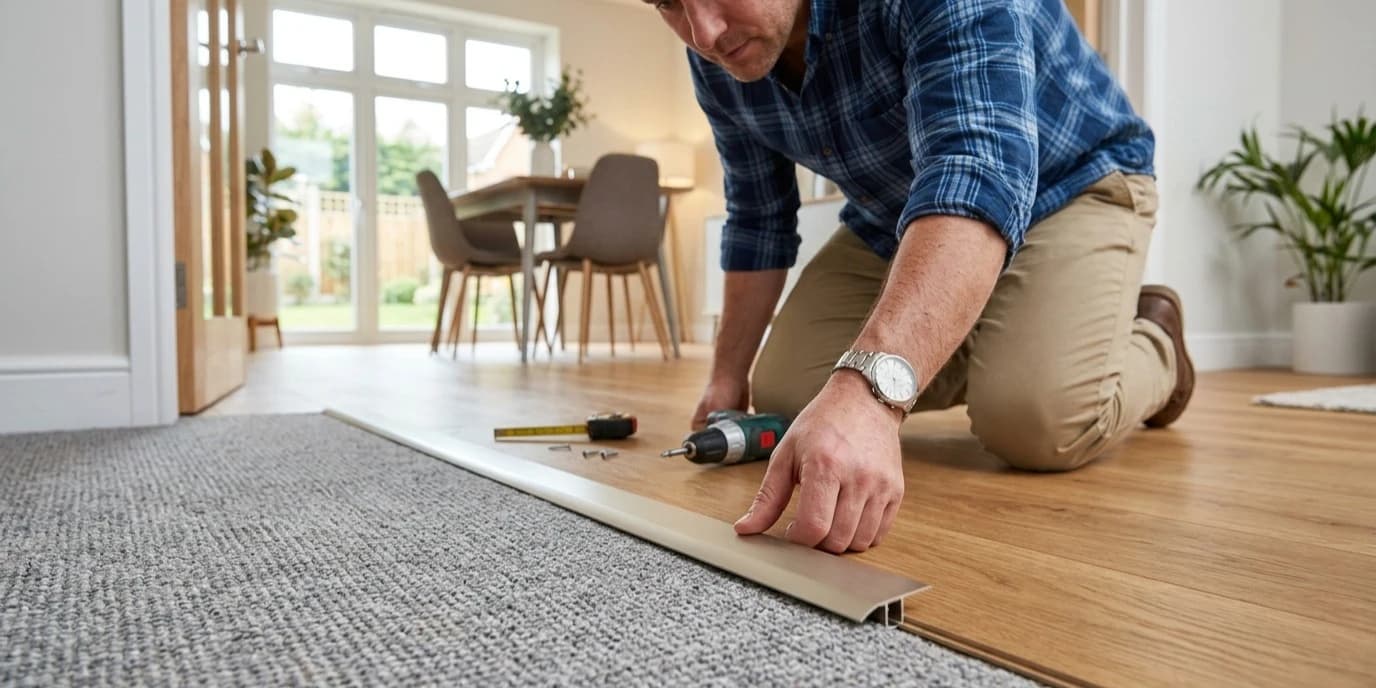
Where carpet meets a hard floor, a self-adhesive carpet threshold is typically the best solution. Carpet edges can fray, curl, or become a trip hazard over time if left unprotected, especially at doorways where they'll get more foot traffic.
A carpet cover strip works by tucking over or gripping the raw edge of the carpet while providing a smooth, ramped transition down to the adjoining hard floor. This not only tidies up the appearance of the doorway but also helps prevent the carpet edge from lifting or wearing prematurely.
These profiles are especially useful for:
Beyond thresholds designed specifically for doorways, Door Edging Floor Trim products cover a broader range of finishing needs. These include narrower edging strips used to protect exposed flooring edges that don't necessarily sit within a door opening, such as where flooring meets a fitted unit, a hearth, or a change in room level.
Floor edging trim is particularly handy for:
Because these trims are self-adhesive, they're straightforward to fit as part of a wider flooring project without needing to call in a specialist.
Self-adhesive door thresholds are versatile and suit a wide range of settings, including:
Whatever the setting, matching the threshold type to the flooring materials involved will always give the best long-term result.
One of the biggest appeals of self-adhesive thresholds is how straightforward they are to fit. That said, a bit of care at each stage will make a real difference to how well the strip performs and how long it lasts.
Measure the width of the doorway or gap accurately before cutting anything. It's worth double-checking measurements at both ends of the opening, as doorways aren't always perfectly square.
This step is often rushed, but it's the most important. The subfloor must be clean, dry, and free from dust, grease, or old adhesive residue. Any debris left underneath will weaken the bond and can cause the strip to lift over time. A wipe with a suitable cleaner, followed by thorough drying, is essential before proceeding.
Most self-adhesive thresholds can be cut with a hacksaw (for aluminium) or a sharp utility knife (for PVC and softer profiles). Always measure twice and cut once, checking the fit in the doorway before removing any adhesive backing.
Peel back the protective backing gradually rather than all at once, positioning the strip carefully as you go. This gives you more control and reduces the risk of misalignment.
Once positioned, press firmly along the full length of the strip, working from one end to the other. Some manufacturers recommend standing or applying body weight briefly to ensure full contact with the subfloor, particularly at the edges.
If you're planning a wider flooring project and want to explore the full range of profiles and flooring transition solutions available, it's worth browsing Door Thresholds to compare options before you buy.
Choosing the right profile comes down to a few key factors:
If you're unsure, take measurements of the height difference and the doorway width before browsing, as most product ranges are organised by these specifications.
Getting the transition between flooring types right makes a noticeable difference to how a room looks, feels, and wears over time. Self-adhesive door thresholds offer a practical, low-cost, and DIY-friendly way to achieve a neat, safe finish, whether you're fitting a self-adhesive Aluminium Door Threshold in a busy kitchen doorway, a wood effect strip between two living spaces, a carpet cover profile at a bedroom entrance, or simple door edging floor trim to finish an exposed edge.
With the right preparation, accurate measuring, and a profile suited to your flooring combination, a self-adhesive threshold is one of the simplest upgrades you can make to any renovation project.

A renovation budget tends to go on the visible headline items — new flooring, a fitted kitchen
8 September 2026
Walk into most UK homes, and you'll find at least one spot where two different floors meet awkwardly
4 September 2026
When completing a home renovation or simply updating the flooring in a single room, attention to det
4 September 2026
Be the first to share your thoughts
No comments yet. Be the first to comment!
Share your thoughts and join the discussion below.
.webp&w=3840&q=75)
.webp&w=3840&q=75)

.webp&w=3840&q=75)