
* All product/brand names, logos, and trademarks are property of their respective owners.
Walk into most UK homes, and you'll find at least one spot where two different floors meet awkwardly — a slightly raised lip between the kitchen tile and the hallway laminate, a fraying carpet edge by the bedroom door, or a gap under an external door that lets in a draught. These small details are easy to overlook, yet they're often the difference between a home that feels finished and one that doesn't.
This is where door thresholds and floor transition profiles come in. They're inexpensive, straightforward to fit, and solve a surprising number of everyday problems: trip hazards, exposed flooring edges, draughts, and untidy joins between rooms. This guide explains what they are, where they're used, and how to choose the right one for your flooring, with more options to browse at stairsnosing.co.uk.
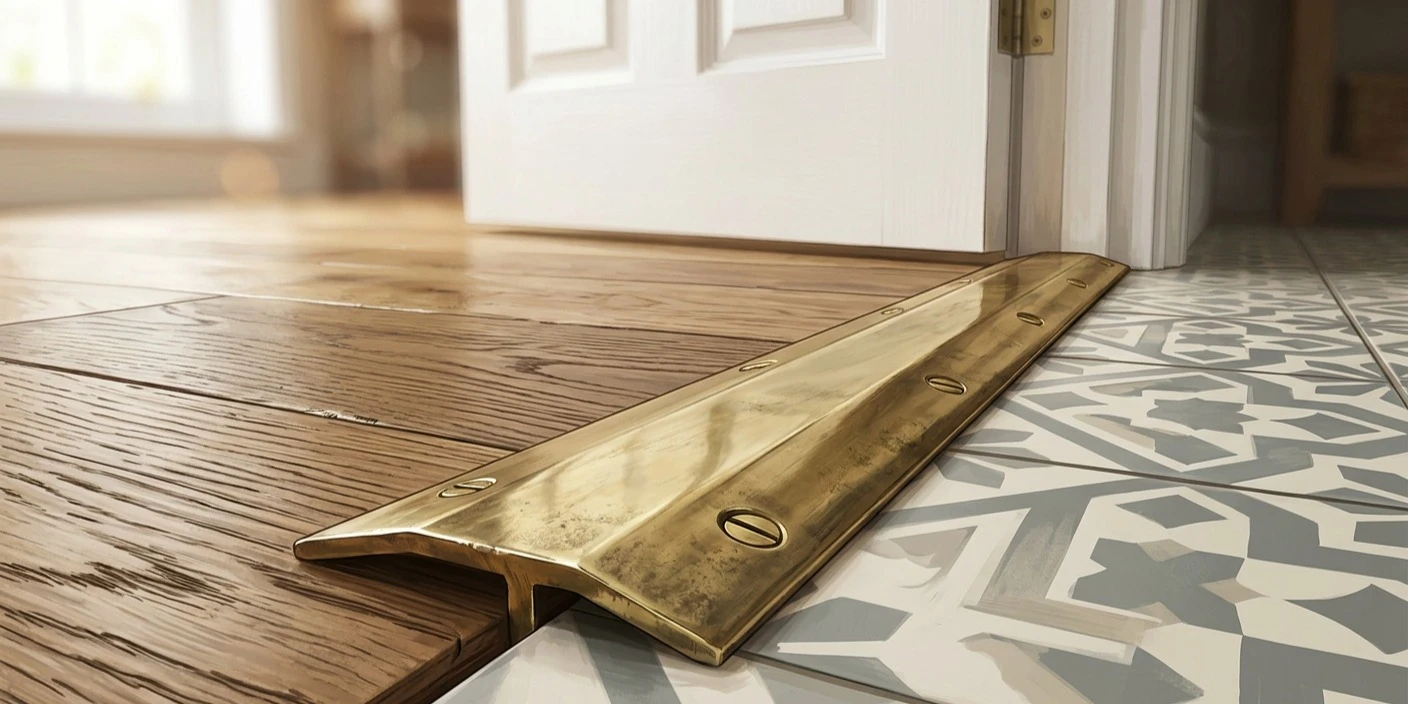
A door threshold, sometimes called a threshold strip or transition strip, is a narrow bar of material fitted at the point where two floor surfaces meet — typically under a doorway. It bridges the gap or height difference between the two floors, protects their edges, and creates a clean visual break between rooms.
Thresholds matter for a few practical reasons:
They're used throughout the home: internal doorways between rooms with different flooring, hallway-to-kitchen transitions, bathroom entrances, and external doors leading to a garden, garage, or conservatory.
The material you choose affects durability, appearance, and how well the threshold copes with its environment.
Wood-effect door thresholds are designed to visually match laminate, engineered wood, or wood-look vinyl flooring, giving a coordinated look rather than a strip that stands out. They're a popular choice for internal doorways where appearance matters as much as function — for example, between a laminate-floored living room and a wood-effect hallway. They're generally suited to low-to-moderate moisture areas rather than bathrooms or external doors.
uPVC door thresholds are a practical, cost-effective option, particularly where moisture resistance and low maintenance are priorities. They don't warp or rot the way timber can, which makes them a sensible choice for kitchens, utility rooms, and doorways that see everyday spills or damp mopping. uPVC profiles are also usually easy to trim to width, which helps with straightforward DIY fitting.
Aluminium door thresholds are known for their strength and durability, making them well suited to high-traffic areas, commercial settings, and external doors that need to withstand weather and heavy footfall over time. They're slimmer and more rigid than plastic alternatives, and many come with a mill, silver, or anodised finish that suits modern interiors. For a front or back door threshold, aluminium is often the more resilient long-term option.
Self-adhesive door thresholds are a convenient option where a permanent screw fixing isn't practical or desired, such as in rented accommodation, on floating floors, or over surfaces that shouldn't be drilled into. Backed with a strong adhesive strip, they're generally quick to fit, requiring the surface to be clean, dry, and level before application. They're a useful choice for lower-traffic internal doorways or as a temporary fix while a more permanent solution is planned, though they may not offer the same longevity as screw-fixed profiles in busy or heavily used areas.
Not every transition needs a full two-sided threshold. A door edging floor trim is designed to finish and protect the exposed edge of a single flooring type, rather than bridge two different floors of similar height.
This type of trim is useful when:
Edging trims are often lower-profile and less visually prominent than a full threshold, making them a good choice where a subtle finish is preferred.
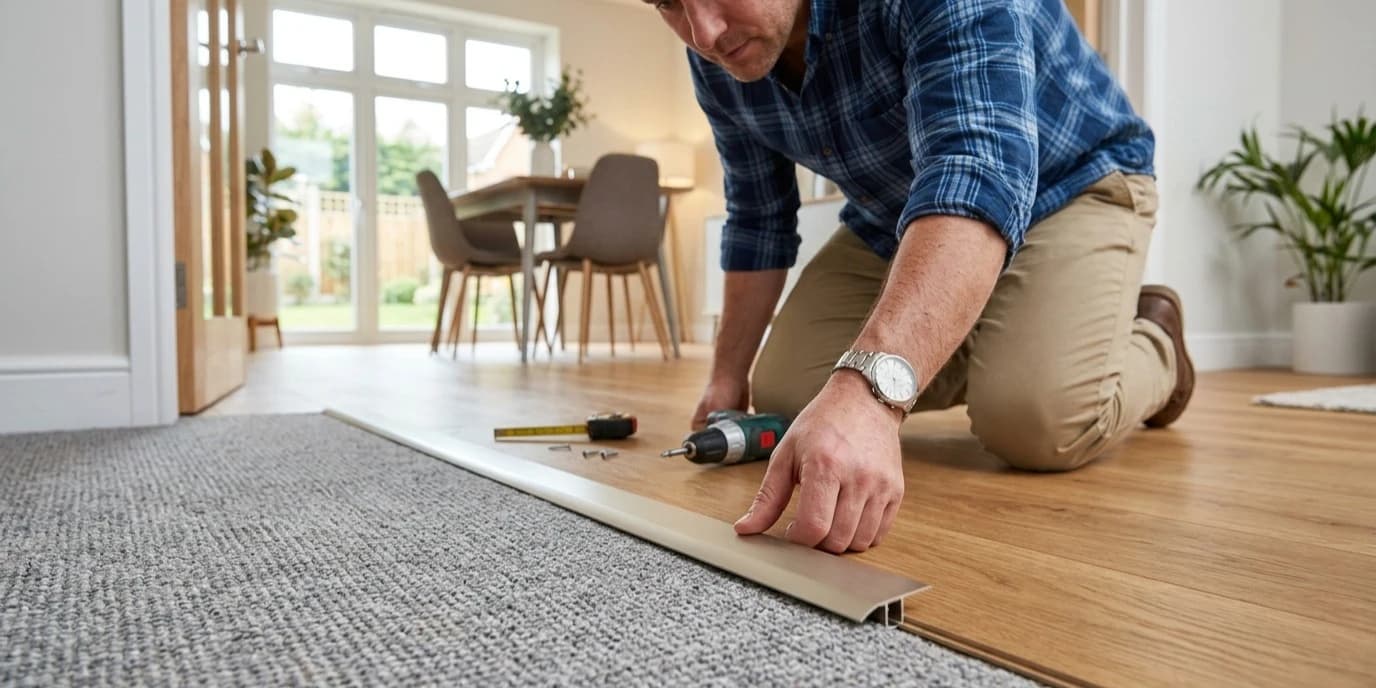
A carpet cover profile is specifically designed for transitions involving carpet. Carpet edges can fray, lift, or gather dust and grit if left exposed, particularly in doorways where they're constantly walked over.
A carpet cover profile typically grips the cut edge of the carpet under a retaining bar or gripper section, holding it securely in place while providing a smooth transition to the adjoining floor — whether that's tile, laminate, vinyl, or wood. This is especially useful in hallways, bedrooms, and stairs-to-landing junctions, where carpet often meets a harder flooring type.
For anyone unsure which profile suits a particular combination of floors, sites like stairsnosing.co.uk serve as a useful UK-based reference point for comparing the full range of options available.
Not necessarily. If both floors are the same type, level, and colour, a threshold may not be needed. They're most useful where flooring types, heights, or finishes differ.
A threshold typically bridges two different floors, often with a height difference. A door edging floor trim protects and finishes a single flooring edge, usually where there's little or no height change.
Many carpet cover profiles can accommodate different pile and underlay thicknesses, but it's worth checking the profile's height range against your specific carpet and underlay combination before purchasing.
Measure the height difference between the two finished floor surfaces at the doorway, then compare this against the height range specified for each threshold or transition profile.
Door thresholds and floor transition profiles are a small detail with a genuinely practical impact — protecting flooring edges, reducing trip hazards, managing draughts, and giving doorways a neat, finished look.
Taking the time to measure accurately and choose a material suited to the room's traffic and moisture levels will make the difference between a trim that lasts and one that needs replacing within a year or two. Whether you're finishing a single doorway or renovating a whole property, getting this detail right is well worth the effort.

Anyone who has renovated a room in a UK home knows that the trickiest part often isn't the flooring
9 September 2026
A renovation budget tends to go on the visible headline items — new flooring, a fitted kitchen
8 September 2026
When completing a home renovation or simply updating the flooring in a single room, attention to det
4 September 2026
Be the first to share your thoughts
No comments yet. Be the first to comment!
Share your thoughts and join the discussion below.
.webp&w=3840&q=75)
.webp&w=3840&q=75)

.webp&w=3840&q=75)






.webp&w=3840&q=75)