* All product/brand names, logos, and trademarks are property of their respective owners.
Staircases are one of the most frequent sites for slips, trips, and falls in homes and commercial buildings alike. A worn step edge, a slick surface, or a step you can't quite see clearly can turn a routine trip up or down the stairs into a serious accident. For property owners, facility managers, and construction professionals, tackling this risk isn't a nice-to-have — it's a core part of building safety and upkeep.
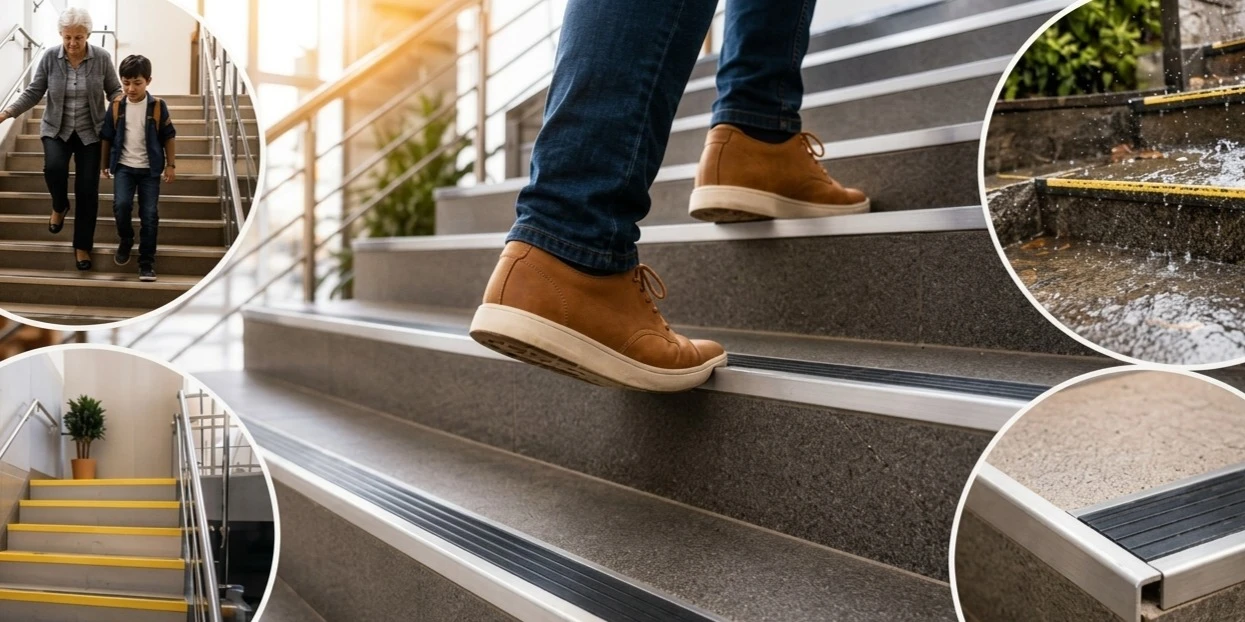
Anti-slip stair nosing offers a simple, cost-effective fix. It reinforces the leading edge of each step, boosts grip underfoot, and often extends the life of the stair itself. This guide walks through what anti-slip stair nosing is, why it matters, and how to pick the right type for your project — with help from specialists like Stairs Nosing, who supply a full range of nosing profiles for different environments.
The nose of a stair — the front edge of each tread — absorbs the brunt of daily wear. It's the first point of contact for every footstep, and over time that constant pressure wears down flooring materials, rounds off edges, and chips away at traction. In wet, dusty, or high-traffic environments, this wear sets in even faster.
Slips on stairs are rarely down to just one cause. Worn tread edges, poor lighting, inconsistent step heights, and slippery flooring often stack up together to create a hazard. Anti-slip stair nosing tackles the traction problem head-on, adding a textured, high-grip surface exactly where it counts most — right at the edge, where foot placement matters.
Beyond safety, nosing also protects the structural integrity of the step itself. Reinforced edges resist chipping, cracking, and delamination, which matters a lot for materials like LVT, laminate, or softwood that can wear down quickly under constant footfall.
Anti-slip stair nosing is a strip or profile fitted along the front edge of a stair tread. It usually combines two jobs in one: a durable protective edge and a slip-resistant surface, typically achieved through embedded grit, ribbed patterns, or textured inserts.
Depending on the material and installation method, nosing can be:
The right choice comes down to the environment, the existing flooring, and how much foot traffic the stairs handle day to day.
Some settings see disproportionately high stair-related incident rates, which is exactly where anti-slip nosing earns its keep:
Not all stair nosing is built the same way, and picking the wrong type can mean poor adhesion, premature wear, or a mismatch with your existing flooring. Here's a breakdown of the main options.
For fast installations without structural work, self-adhesive stair nosing is often the most practical choice. It bonds directly onto the existing step surface, making it ideal for retrofits in offices, rental properties, or anywhere downtime needs to be kept to a minimum. It's not always the best fit for extremely high-traffic industrial areas, but it performs well in moderate-traffic residential and commercial spaces.
Luxury vinyl tile (LVT) flooring has become a popular choice for its durability and looks, but standard LVT edges can turn slippery and start lifting on stairs. LVT stair nosing is built specifically to complement this flooring type, protecting the tile edge while keeping a consistent, professional finish that matches the rest of the floor.
For durability in demanding environments, aluminium stair nosing is hard to beat. It stands up to heavy foot traffic, resists corrosion, and holds its own in industrial or commercial settings with constant use. Many aluminium profiles also come with replaceable inserts, so the anti-slip strip can be renewed without replacing the entire nosing.
Where moisture resistance is the priority — kitchens, bathrooms, or exterior stairwells — UPVC stair nosing offers a practical, low-maintenance solution. It resists warping and won't corrode, making it well suited to environments with fluctuating humidity or occasional water exposure.
For a softer, more rounded profile, bullnose stair nosing offers both aesthetic appeal and a practical safety benefit. The curved edge reduces the risk of catching a foot or heel on a sharp lip, which is particularly useful in homes with young children or elderly residents.
If you're weighing up which profile suits your stairs, browsing a dedicated range of anti slip stair nosing options side by side makes it easier to match material, colour, and finish to your specific flooring.
Even the best anti-slip stair nosing underperforms if it's fitted incorrectly. A few practical points worth keeping in mind:
In the UK, workplace and public building stairs fall under safety regulations addressing slip resistance and edge visibility, particularly under general health and safety legislation and building regulations covering stair design. Requirements vary by building type and use, but facility managers and contractors should treat stair nosing as part of a broader compliance strategy rather than a cosmetic upgrade.
Regular inspection matters just as much as the initial install. Worn nosing loses its grip over time, and a strip that once met safety standards can quietly become a hazard. Building a periodic inspection routine into general maintenance schedules helps catch this before it turns into a liability issue.
There's no single best type of anti-slip stair nosing — the right choice depends on your flooring, traffic levels, environment, and budget. A retail unit with LVT flooring has very different needs from an industrial warehouse with concrete steps, or a residential staircase in an older home.
What matters most is treating stair safety as an ongoing responsibility rather than a one-time fix. Materials wear down, traction diminishes, and buildings change use over time. Choosing durable, properly specified nosing — and inspecting it regularly — goes a long way toward preventing avoidable accidents.
For property owners, builders, and facility managers alike, a modest investment in quality stair nosing, sourced from a specialist supplier, is one of the most straightforward ways to reduce liability, protect flooring, and keep staircases safe for everyone who uses them.

Anyone who has renovated a room in a UK home knows that the trickiest part often isn't the flooring
9 September 2026
A renovation budget tends to go on the visible headline items — new flooring, a fitted kitchen
8 September 2026
Walk into most UK homes, and you'll find at least one spot where two different floors meet awkwardly
4 September 2026
Be the first to share your thoughts
No comments yet. Be the first to comment!
Share your thoughts and join the discussion below.
.webp&w=3840&q=75)
.webp&w=3840&q=75)






.webp&w=3840&q=75)