
* All product/brand names, logos, and trademarks are property of their respective owners.
Selecting the right floor paint is an important decision for factories, garages, and warehouses, where flooring is exposed to daily wear, heavy loads, and challenging environmental conditions. In both industrial settings and serious home improvement projects, floors must do more than look presentable—they need to perform reliably over time.
In the UK, concrete floors are widely used across commercial and domestic spaces, but they vary significantly in age, porosity, moisture exposure, and usage. A coating that works well in a lightly used garage may not be suitable for a warehouse with forklift traffic or a factory handling oils and chemicals. Understanding these differences is essential when choosing a floor paint that delivers durability, safety, and long-term value.
This guide explores how to choose the most appropriate floor paints for factories, garages, and warehouses, focusing on performance requirements rather than marketing claims. By breaking down each environment, you’ll be better equipped to make informed decisions based on real-world use.
Industrial floor paints are designed to protect concrete surfaces under conditions that standard decorative paints are not built to handle. They play a functional role in extending floor life, improving safety, and reducing maintenance demands across demanding environments.
Unlike conventional paints, industrial floor coatings are formulated to bond strongly with concrete substrates. Rather than sitting only on the surface, they interact with the concrete to create a tougher, more resilient finish. This stronger bond helps reduce common issues such as peeling, flaking, and surface breakdown over time. In garages, factories, and warehouses, floors are regularly exposed to abrasion, impact, moisture, and chemical contact. Industrial coatings are developed to withstand these stresses, offering a level of protection that decorative paints are not designed to provide.
Durability is a core requirement for any industrial floor paint. The coating must withstand repeated foot traffic, vehicle movement, and mechanical stress without wearing through prematurely. Strong adhesion is equally important, particularly on older UK concrete floors that may be porous or dusty. Resistance to oils, fuels, moisture, and cleaning chemicals also plays a key role. Matching these performance characteristics to the specific environment helps ensure the floor remains functional, safe, and easier to maintain over the long term.
Factory floors operate under demanding conditions, often for extended hours or continuous shifts. The right floor paint helps protect the concrete while supporting safer and more efficient working environments.
Manufacturing spaces typically involve heavy machinery, pallet movement, and sustained foot traffic. Over time, untreated concrete can crack, dust, and degrade, increasing maintenance requirements and safety risks. In such settings, floor coatings with higher abrasion resistance and chemical tolerance are commonly specified to help maintain surface integrity and reduce disruption caused by frequent repairs.
Many factory floors benefit from proper sealing before a topcoat is applied. Older or porous concrete can absorb paint unevenly, which weakens adhesion and shortens the coating’s lifespan. Using a stabilising undercoat helps strengthen the substrate and create a more consistent base for the final finish. This preparation stage plays a significant role in how well the floor performs over time, particularly in high-stress industrial environments.
Garages often bridge the gap between home and industrial spaces, and how they’re used has changed a lot in recent years. Across the UK, many garages now double as workshops, storage rooms, or practical work areas rather than just places to park cars.
Home garages deal with moisture, tyre marks, and occasional oil spills, while commercial workshops face heavier vehicle traffic, dropped tools, and frequent cleaning. This means floor paints need to offer durability without becoming brittle.
Oil stains, tyre scuffs, and temperature swings are common challenges. Coatings with good abrasion resistance help maintain a cleaner surface and reduce long-term wear.
Warehouse floors support constant movement, heavy loads, and long operational hours. A suitable floor coating helps protect the concrete while maintaining safety and efficiency.
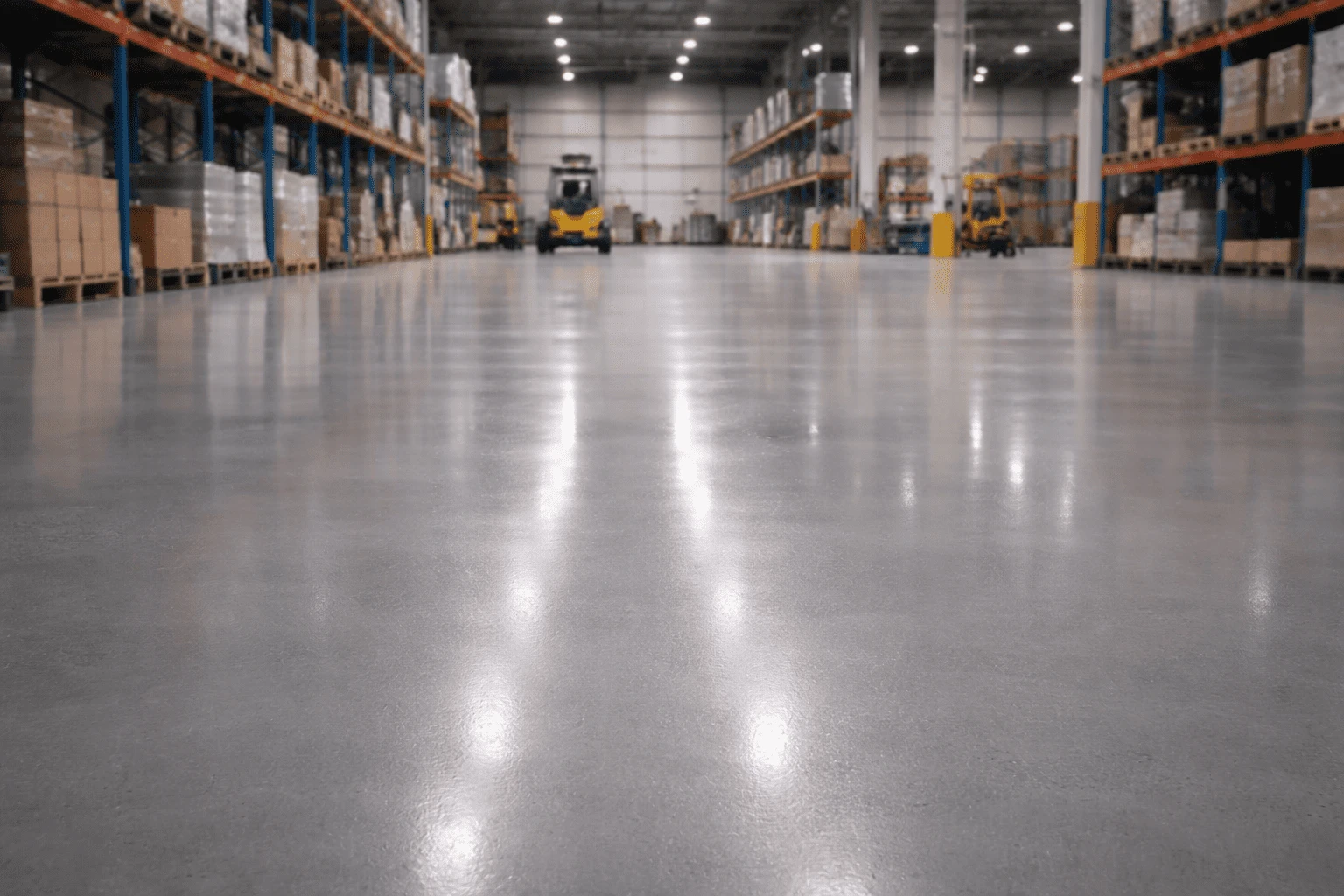
Forklifts, pallet trucks, and storage systems place repeated stress on warehouse floors, particularly along main travel routes and loading zones. Without adequate protection, concrete can wear quickly and produce dust that affects both safety and cleanliness. Coatings designed for industrial traffic help reduce abrasion and surface breakdown, contributing to a cleaner and more controlled working environment.
Large warehouse floors benefit from coatings that provide strong coverage and long service life, helping reduce downtime and minimise the need for frequent reapplication. Careful surface preparation, including thorough cleaning and timely repairs, is essential to achieving consistent results. In this context, Floor Paints are commonly used as a protective solution for high-traffic environments, as they are formulated to withstand heavy loads and demanding operational conditions without compromising performance.
Different industrial environments benefit from different coating technologies, and understanding these distinctions helps ensure the right choice is made.
Polyurethane floor paints are widely used due to their flexibility and abrasion resistance. Unlike more rigid systems, they cope well with slight concrete movement and temperature fluctuations, making them particularly suitable for garages and warehouses.
They also offer strong resistance to tyre marks, oils, and repeated impact, which contributes to longer service life in high-use areas.
In addition to performance, polyurethane coatings provide a clean, professional finish that improves the overall appearance of working environments. Over time, reduced maintenance and fewer repairs can make these systems a practical long-term solution for both commercial and industrial spaces.
Selecting the right floor paint starts with understanding how the space will be used and what stresses the floor will face daily.
Consider traffic levels, vehicle movement, chemical exposure, and moisture conditions. A lightly used garage requires a different solution than a warehouse operating heavy machinery every day. The condition of the existing concrete—such as cracks, surface dusting, or previous coatings—should also influence your decision.
Taking time to assess these factors helps avoid premature coating failure and unnecessary maintenance.
Even the most durable floor paint relies on proper preparation. Thorough cleaning, degreasing, repairing surface damage, and allowing sufficient curing time are essential steps. Following these processes ensures the coating performs as intended and reaches its expected lifespan.
Choosing the best floor paint for factories, garages, and warehouses is ultimately about understanding performance requirements rather than focusing solely on appearance. Each environment presents distinct challenges, from heavy machinery in factories to tyre friction in garages and constant movement in warehouses. By assessing how a space is used, preparing the concrete properly, and selecting a coating designed for those conditions, it’s possible to achieve a floor that lasts longer, performs more reliably, and requires less ongoing maintenance. Thoughtful selection and application lead to practical, long-term outcomes across both industrial and serious domestic projects. For additional technical insights and UK-focused industrial flooring information, readers can refer to resources available at industrialmaterial.uk.
When people plan a renovation, most of the excitement goes toward the big decisions: flooring, paint
17 September 2026
There's a particular kind of room that looks "finished" without you being able to say exactly why. O
7 September 2026
Every trade counter and builders' merchant has a section that's slightly harder to categorise than t
3 September 2026
Be the first to share your thoughts
No comments yet. Be the first to comment!
Share your thoughts and join the discussion below.

%20(1).webp&w=3840&q=75)
.webp&w=3840&q=75)
.webp&w=3840&q=75)


.webp&w=3840&q=75)

.webp&w=3840&q=75)