
* All product/brand names, logos, and trademarks are property of their respective owners.
Customer information once lived everywhere: email inboxes, spreadsheets, sticky notes, and occasionally someone’s memory (which, as experience proves, is not a reliable database). Businesses eventually realized that scattered data slows growth and frustrates teams. This realization pushed many organizations toward modern digital solutions designed to organize and streamline customer relationships. One such solution is Cloud-Based CRM, a platform that stores customer data online and makes it accessible across teams. Instead of wrestling with outdated systems, companies gain a single place that makes communication easier, strengthens collaboration, and helps organizations focus on what matters—building better customer relationships.
Modern businesses rely heavily on digital infrastructure, and customer management is no exception. A cloud-hosted CRM system stores data on remote servers rather than local machines, allowing users to access information through the internet. This approach eliminates the limitations of traditional on-premise systems that require costly installations and constant maintenance. Many organizations now rely on tailored solutions developed with CRM software, ensuring that workflows align with the unique structure of their operations. The result is a flexible platform that adapts to business processes rather than forcing companies to adjust their strategies around rigid software tools.
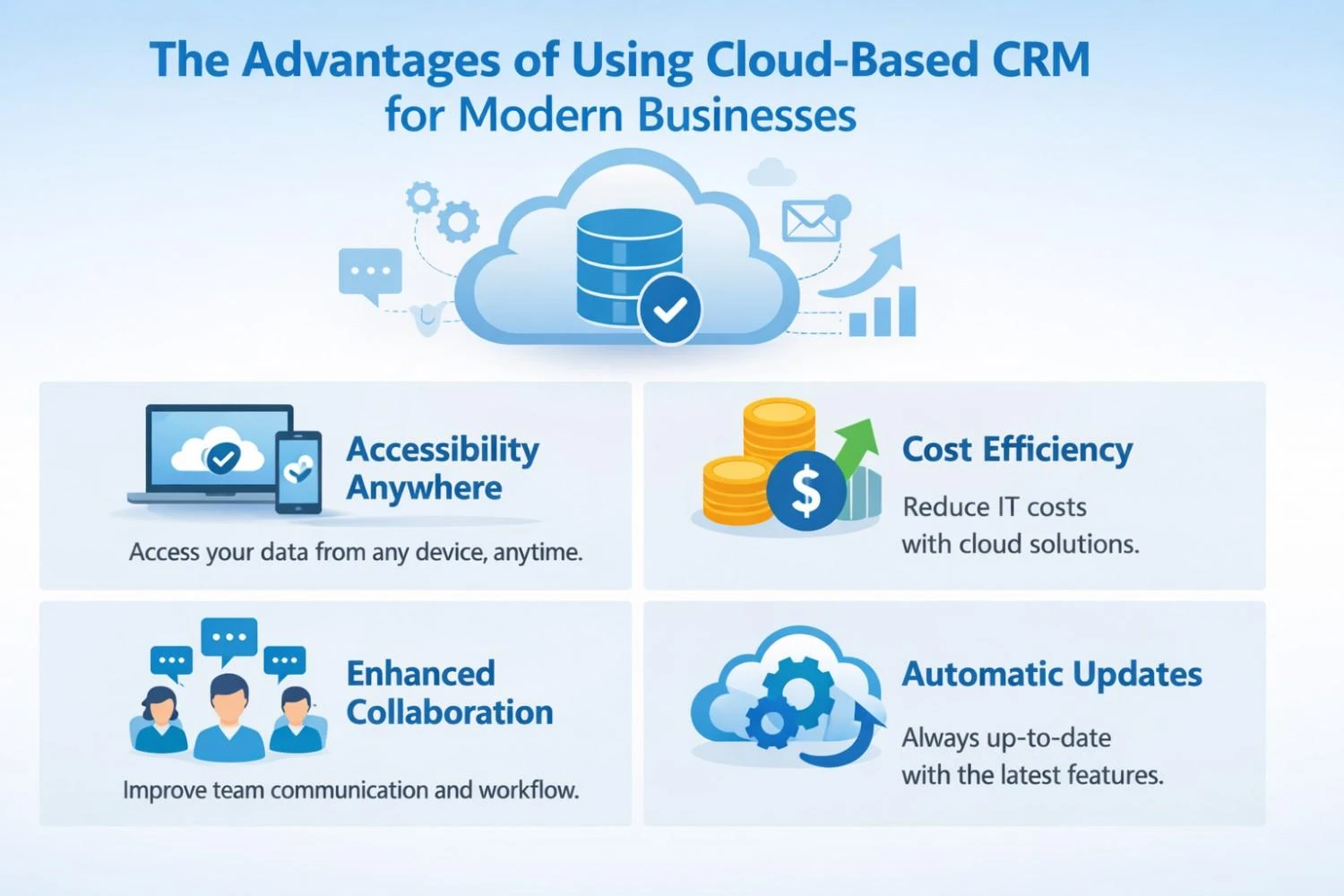
Flexibility has become the defining feature of modern work environments. Cloud-based platforms allow employees to access essential information regardless of location—whether in the office, working remotely, or meeting clients across the city. Sales representatives can review customer history before a meeting, while managers monitor progress without waiting for weekly reports. The convenience often feels almost suspiciously easy (like finding a perfectly organized drawer in a house usually filled with clutter). With reliable access across devices, teams remain connected and productive, ensuring that customer conversations continue smoothly without delays caused by inaccessible or outdated data.
Financial planning always plays a role when businesses evaluate new technology. Cloud solutions reduce the need for expensive hardware, in-house servers, and dedicated IT infrastructure. Instead of purchasing software licenses outright, organizations typically operate under subscription-based models that offer predictable monthly costs. This flexibility allows companies to expand or reduce usage as business needs change. Growth no longer requires replacing entire systems or investing heavily in additional infrastructure. The platform simply scales alongside the organization, making cloud adoption particularly attractive for startups and growing enterprises that prefer agility over long-term technological commitments.
Customer relationships rarely belong to a single department. Marketing teams generate leads, sales teams nurture opportunities, and support teams maintain ongoing communication after purchases. When each group works with different systems, confusion inevitably follows. Cloud-based CRM platforms solve this issue by creating a shared space where information remains visible to everyone involved. Marketing campaigns, sales conversations, and support interactions all appear within one environment. This transparency improves teamwork and eliminates redundant communication. Instead of asking colleagues for updates, employees simply open the dashboard and see the complete customer story unfold in real time.
Repetitive administrative tasks quietly consume a large portion of the workday. Logging customer interactions, scheduling reminders, assigning leads, and sending follow-up emails may seem small individually, yet they quickly accumulate. Automation tools within CRM platforms reduce this burden by handling routine processes automatically. Businesses often rely on a CRM developer to configure workflows that match operational goals, ensuring the system supports employees rather than complicates their responsibilities. Once automation is properly implemented, teams spend less time managing tasks and more time engaging with customers—an outcome that benefits both productivity and overall satisfaction.
Every business decision benefits from reliable data, yet raw information alone rarely provides clarity. CRM analytics transform customer interactions into meaningful insights through visual dashboards and detailed reports. Sales trends, lead conversions, and customer engagement patterns become easier to interpret when presented in organized formats. Sometimes the results are surprisingly revealing (for instance, discovering that a single marketing campaign generated more leads than three previous strategies combined). These insights allow leadership teams to adjust strategies quickly and confidently, replacing guesswork with measurable evidence that guides future growth and operational improvements.
Customer data represents one of the most valuable assets within any organization, which naturally raises security concerns. Cloud providers invest heavily in encryption, authentication systems, and continuous monitoring to safeguard sensitive information. Automatic backups and disaster recovery features protect businesses from data loss caused by technical failures or unexpected disruptions. Compared with traditional storage methods, modern cloud platforms often provide stronger protection due to dedicated security infrastructure. Companies benefit from enterprise-level safeguards without needing to manage complex systems internally, creating confidence that critical information remains protected at all times.
Business operations rarely rely on a single application. Marketing platforms, accounting software, communication tools, and analytics dashboards all play a role in daily workflows. Cloud-based CRM systems integrate with many of these services, allowing data to move seamlessly between platforms. For example, marketing campaign responses can automatically appear in customer profiles, while invoices from accounting systems link directly to account records. These integrations reduce manual data entry and prevent inconsistencies across systems. Over time, the business environment becomes a connected ecosystem where information flows naturally instead of remaining isolated within separate digital tools.
Technology evolves rapidly, and software that fails to adapt quickly becomes obsolete. Cloud platforms address this challenge by delivering continuous updates and improvements without requiring manual installations. New features appear automatically, ensuring that businesses always operate with modern tools and capabilities. Many platforms also incorporate artificial intelligence features that help predict customer behavior or identify promising leads. These advancements create opportunities for smarter decision-making and improved efficiency. Organizations adopting cloud solutions therefore position themselves for long-term growth, benefiting from technology that evolves alongside changing business needs and industry expectations.
Ultimately, the value of any CRM system lies in how well it strengthens relationships with customers. Centralized information enables businesses to respond faster, personalize communication, and anticipate client needs more accurately. Sales representatives understand purchase history, support teams resolve issues quickly, and marketing departments craft messages that resonate with specific audiences. Customers notice these improvements—sometimes subtly, sometimes dramatically. Interactions feel smoother, responses arrive quicker, and communication becomes more relevant. Over time, these small enhancements accumulate into stronger loyalty, improved retention, and relationships built on trust rather than transactional exchanges.
Adopting new technology rarely happens without a few obstacles. Data migration from older systems can require careful planning, especially when large volumes of customer records must be transferred accurately. Teams may also need training to become comfortable with new interfaces and workflows. Selecting the right platform is another critical step, as every business has unique requirements and priorities. Despite these challenges, thoughtful preparation typically minimizes disruption. With proper implementation strategies and clear goals, organizations transition smoothly while gaining long-term operational benefits that outweigh the initial effort.
Business technology often promises dramatic transformation, yet the most valuable innovations usually accomplish something simpler—they remove friction. Organized customer data, accessible dashboards, automated processes, and collaborative tools all contribute to a smoother working environment. Modern CRM platforms embody this principle by bringing clarity to an area that once felt overwhelmingly complex. When information becomes accessible and teams communicate effectively, businesses gain the freedom to focus on meaningful interactions rather than administrative obstacles. In the end, the real advantage lies not just in smarter software, but in the stronger relationships that grow from it.
A cloud CRM system is a customer relationship management platform hosted online, allowing businesses to access customer data through the internet without installing software on local machines.
It centralizes information, automates repetitive tasks, and enables real-time collaboration, allowing employees to focus more on strategic activities rather than administrative work.
Yes. Cloud platforms provide flexible pricing and scalable features, making them ideal for startups and growing businesses that require adaptable technology solutions.
Most modern CRM platforms integrate with marketing software, accounting systems, email tools, and analytics platforms to create a connected digital ecosystem.
Reputable cloud providers implement strong security measures, including encryption, regular backups, access controls, and monitoring systems to protect sensitive business data.
Artificial intelligence is quickly becoming part of critical business operations. Enterprises now us
10 August 2026
Planning a successful event requires more than selecting the perfect venue. Whether you're organizin
30 July 2026
AIWI Team is one of the best HRMS software solutions in India, helping businesses automate employee
17 July 2026
Be the first to share your thoughts
No comments yet. Be the first to comment!
Share your thoughts and join the discussion below.



.webp&w=3840&q=75)
%20(1).webp&w=3840&q=75)


.webp&w=3840&q=75)
.webp&w=3840&q=75)


.webp&w=3840&q=75)

.webp&w=3840&q=75)