
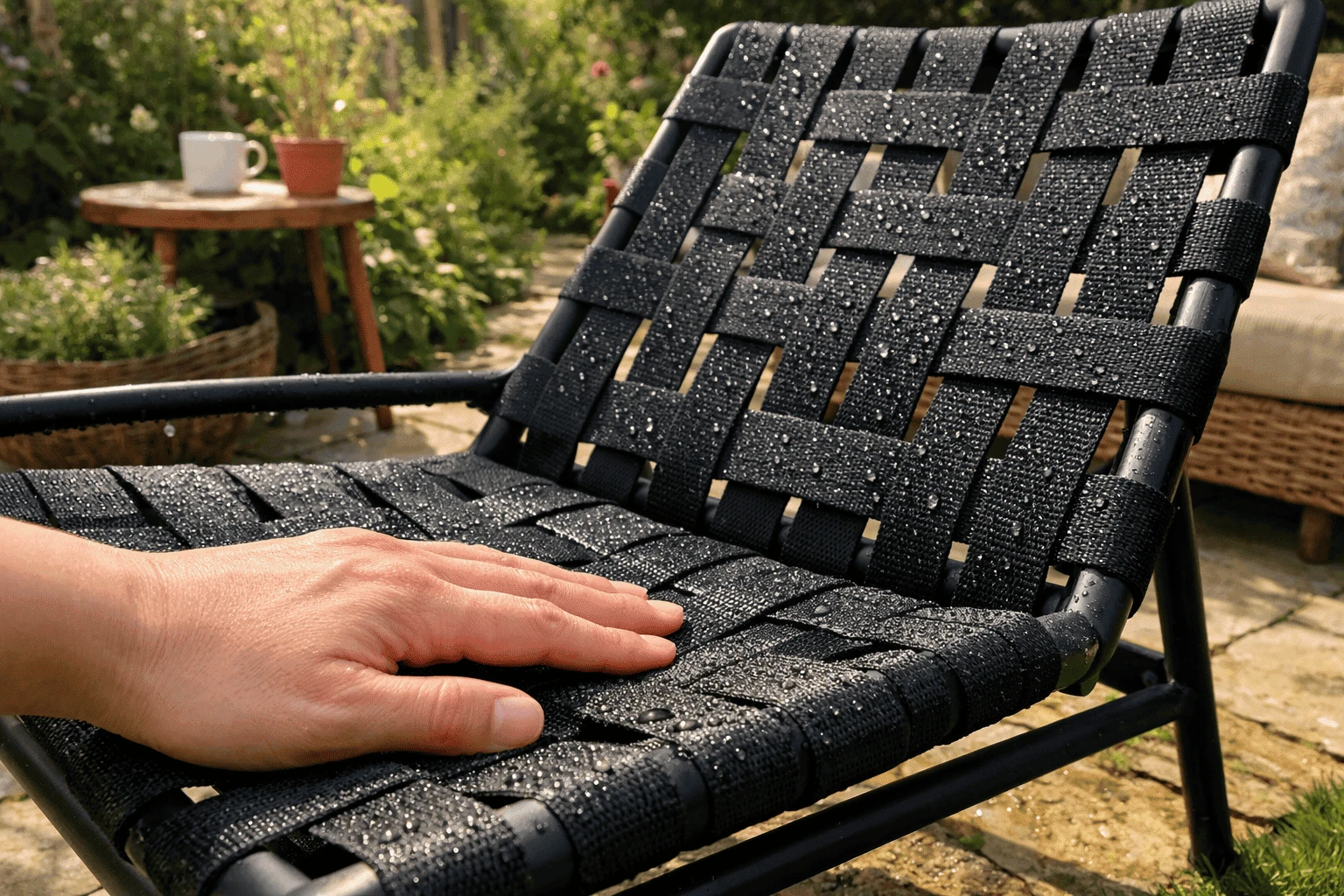
Ever dropped into a garden chair and instantly felt those straps press into your legs? Or grabbed a storage box and winced because the handle dug into your hand? That’s when you realise comfort at home isn’t always about extra padding — it’s about proper support.
A lot of people think fixing that means buying something new. But often, it’s just tired or stretched strapping causing the problem. Swap that out, and the difference is immediate. Polypropylene webbing is a practical fix for UK homes. It’s light, strong, and handles damp weather well — making everyday seating and storage feel sturdier and more comfortable
DIY Comfort Fixes Around the Home Using Polypropylene Webbing
Comfort in DIY projects isn’t always about adding cushions or padding. It’s about support—how weight is distributed, whether pressure feels even, and whether materials stay pleasant to use after weeks of real-life wear. Polypropylene webbing is useful because it combines strength with flexibility. It doesn’t feel overly rigid, yet it resists the kind of stretching that leads to sagging. Below are two areas where homeowners often notice the biggest improvement.
Garden seating & outdoor lounging: stop the sag, stop the strap “bite”
Outdoor seating takes a lot of punishment. Rain, sun exposure, fluctuating temperatures, and repeated use all affect strap tension. Over time, two common comfort issues appear:
-
Sagging support: You sink unevenly instead of feeling evenly held.
-
Strap “bite”: Pressure concentrates on narrow strips, digging into legs or shoulders.
Garage, shed, and storage comfort: better carry straps and less hand strain
Comfort isn’t limited to seating. In garages and sheds, thin or awkward straps can make routine tasks harder than they need to be. Lifting storage bins, garden supplies, tools, or seasonal decorations often highlights small but frustrating problems:
-
Twisting straps that don’t sit flat in the hand
-
Edges that dig in during heavier lifts
-
Handles that stretch or feel unstable
Durability & Longevity — Make Repairs That Survive UK Weather
In the UK, durability isn’t theoretical. Materials are exposed to damp air, sudden rain, muddy handling, and occasional frost. A repair that looks neat on a sunny afternoon needs to remain functional weeks later under less ideal conditions. Polypropylene webbing is often chosen for outdoor and semi-outdoor projects because it handles everyday exposure without becoming unpleasant to use. It doesn’t typically feel heavy after rain, and it maintains shape reasonably well when fitted correctly.
Rain, damp, mildew: why everyday practicality matters more than “perfect conditions”
Outdoor materials rarely fail all at once—they tend to wear gradually. Moisture soaks in, items stay damp longer than expected, and over time, they can feel uncomfortable or look worn, even if they don’t break. Garden chairs may have straps that slacken after repeated rain, and storage handles can feel unreliable after prolonged dampness. Polypropylene webbing is practical because it generally recovers once dry, resisting stiffness or sag that other materials show. Sunlight exposure also matters, even in the UK. Ultimately, careful installation—avoiding twists, uneven tension, and rubbing edges—makes repairs last longer, sometimes for years.Picking the right width: the simple “strength + comfort” rule
Choosing webbing width doesn’t need to be complicated. A simple guideline works well for most DIY situations:
-
Narrower widths: Suitable for lighter fastening tasks, slim loops, or compact handles.
-
Wider widths: Better for seating support and frequently lifted items where pressure distribution matters.
If you sit on it or lean back against it, a wider strap generally improves comfort. If you’re organising or securing lighter items, narrower webbing keeps the finish tidy and proportional.
Balancing width with expected load avoids overbuilding small projects or under-supporting heavier ones.
Choosing length like a pro: consistent repairs look better and last longer
Length selection is where many DIYers either overestimate or underestimate what they need. Buying far more than required can feel wasteful, while buying too little often leads to inconsistent spacing or mid-project adjustments.
A practical approach:
-
Quick patch or reinforcement: A short length is usually sufficient.
-
Single chair or seat refresh: Enough continuous length to maintain consistent spacing.
-
Multiple items or larger seating areas: A longer roll ensures uniform tension and appearance across all pieces.
Consistency affects more than aesthetics. Even tension and matching strap lengths help maintain balanced support, which directly influences comfort and durability.
Before starting, measure the total run of each strap, multiply by the number of strips required, and add a small allowance for securing ends. Planning keeps the finished result looking intentional rather than improvised.



%20(1).webp&w=3840&q=75)
.webp&w=3840&q=75)
.webp&w=3840&q=75)
.webp&w=3840&q=75)

.webp&w=3840&q=75)