
* All product/brand names, logos, and trademarks are property of their respective owners.
If you’ve ever tried to fix a loose bag strap, tighten up storage in the shed, or make outdoor gear feel more secure, you’ll know that the details often matter more than the big materials. Smaller components can quietly determine whether a DIY job holds up for months—or starts slipping after a week. Webbing is one of those details that can make everything feel more reliable.
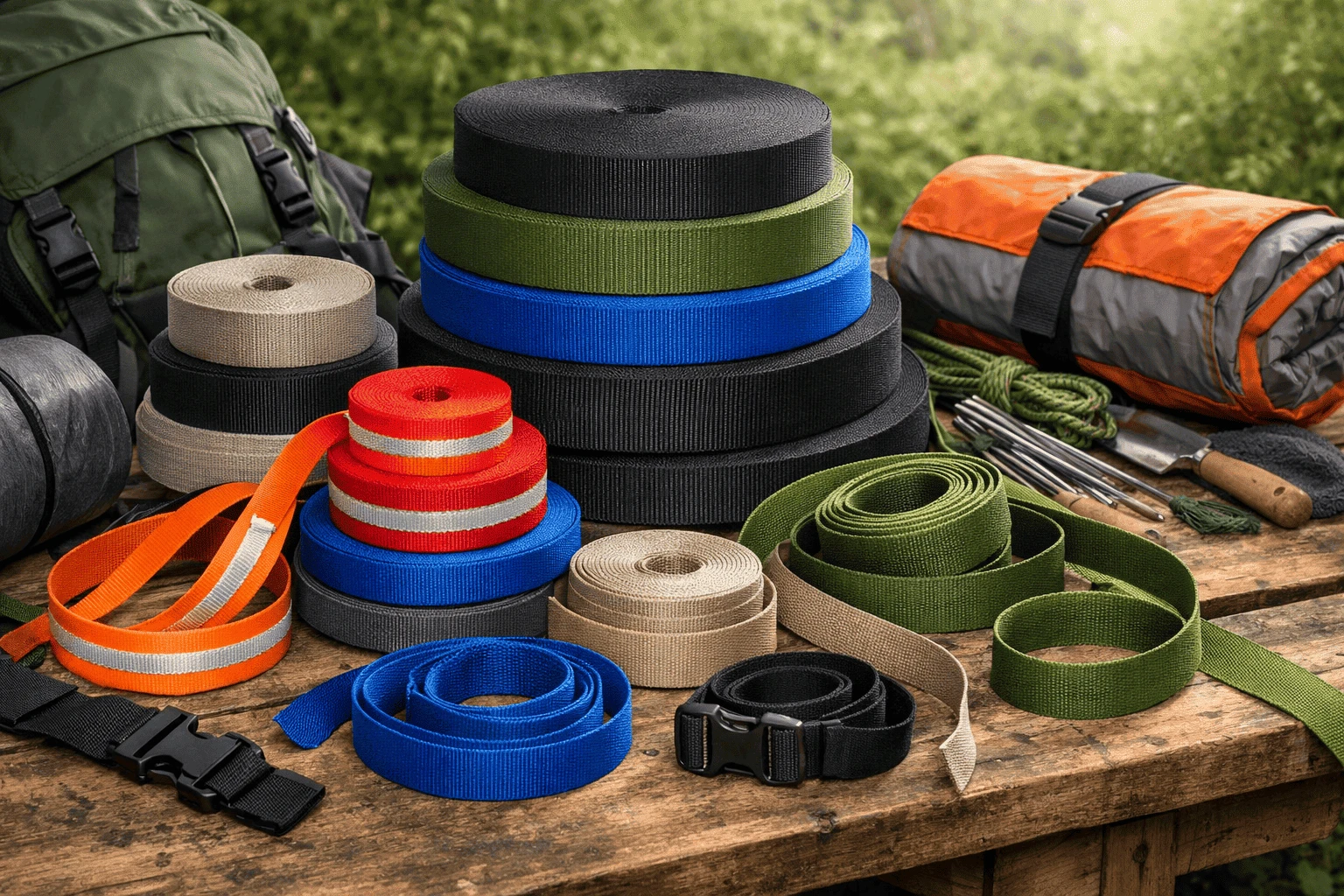
In the UK, weather also plays a significant role. Materials that work perfectly indoors may become problematic when stored in a damp garage, used in the garden, or packed away after a wet weekend. Choosing a strap material isn’t just about strength; you also want something practical, lightweight, and dependable in everyday conditions. Polypropylene webbing is widely used for straps and tie-downs because it balances flexibility with durability, making it suitable for bags, belts, and outdoor gear.
Home improvement projects usually revolve around a few practical goals: the result should be strong, neat, and low-maintenance. Polypropylene webbing fits well into everyday DIY scenarios—from quick strap fixes to more involved outdoor gear upgrades. Below are key reasons it performs so well, particularly in typical UK conditions.
One common mistake is choosing a material that is technically strong but stiff, heavy, or awkward to work with. This can make a bag strap uncomfortable, a belt-style project feel clunky, or a simple tie-down frustrating to use. Polypropylene webbing provides a stable strap feel while remaining lightweight and flexible. It lays flat, folds easily, and behaves predictably when cutting, stitching, or attaching hardware.
Short lengths of webbing are ideal for minor repairs or replacements, ensuring you don’t have leftover material that becomes cumbersome. For larger or repeated projects, longer lengths maintain consistency across multiple fixes without adding unnecessary bulk. Practical examples include securing a rolled groundsheet, adding a retaining strap for long-handled tools, or replacing a worn strap on a frequently used bag. In each case, webbing that stays light yet durable improves both function and usability.
Indoor projects often overlap with semi-outdoor areas, such as porches, sheds, or garden setups, where materials can face moisture, temperature changes, and sun exposure. Polypropylene Webbing serves as a durable material for these conditions, capable of handling frequent use. Its UV-resistant variants help maintain strength and appearance, making it suitable for DIY and outdoor setups that require consistent reliability.
Visibility is an underrated feature until you need to find gear in low-light conditions—early mornings, winter evenings, or at a campsite where everything blends into the shadows. Adding reflective or brightly coloured sections to straps can make items easier to locate and handle without affecting the overall look.
Practical applications include tent porches, boot organisers, or bags where straps are frequently adjusted. Even minor reflective touches can save time and reduce fumbling, particularly during darker seasons. Webbing that maintains its shape and sits flat also helps your DIY work look finished and professional, even on simple repairs.
Polypropylene webbing is versatile, but success depends heavily on two key considerations: length and width. Getting these right ensures your project feels tidy, stable, and durable.
Buying too little webbing can leave you stuck mid-repair, while buying too much can create unnecessary waste. Matching the length to the type of work you’re doing is essential.
Short repairs or small upgrades: Use a compact length suitable for replacing a single strap, adding a loop, or reinforcing one point.
General DIY and home organisation: Medium-length webbing works well for securing a few items, like storage straps or small outdoor gear.
Multiple items or frequent use: Longer rolls ensure consistent results across several repairs or projects.
Ongoing DIY stock: Extra-long lengths can reduce interruptions and support batch repairs or builds.
Allowing extra length for folding, stitching, or fastening points prevents projects from feeling unfinished or unstable.
Width impacts comfort, stability, and the balance of a strap on the item it supports. Choosing the correct width ensures straps feel intentional rather than improvised:
20mm width: Compact and lightweight, ideal for small straps and tidy repairs.
25mm width: Versatile for everyday use, supporting various practical applications.
30mm width: Offers more support for outdoor gear or heavier items.
50mm width: Suitable for bulkier items or heavier loads, helping straps stay stable and comfortable.
Matching width to project scale ensures the strap feels secure, looks proportionate, and functions as intended.
A practical approach to choosing webbing:
Quick strap refresh or small repair: Compact lengths for minimal adjustments.
A few fixes around the home (shed, storage, organisers): Medium-length webbing works well.
Projects that take more wear or involve multiple items: Longer webbing ensures durability.
Outdoor visibility needs (low light, campsite, winter afternoons): Consider reflective or brightly coloured sections.
Sun-facing outdoor setups: UV-stabilized webbing helps maintain longevity.
Thinking of webbing as a project material rather than a product purchase encourages a practical, outcome-focused approach.
Lightweight yet strong, polypropylene webbing is a go-to material for indoor and outdoor DIY projects in the UK.
Careful attention to length, width, and visibility ensures straps work efficiently and remain comfortable. Minor adjustments can turn basic repairs into finished, reliable results. For further details on practical webbing and strap materials, straptapes.co.uk provides reference information in a clear, practical format.
When people plan a renovation, most of the excitement goes toward the big decisions: flooring, paint
17 September 2026
There's a particular kind of room that looks "finished" without you being able to say exactly why. O
7 September 2026
Every trade counter and builders' merchant has a section that's slightly harder to categorise than t
3 September 2026
Be the first to share your thoughts
No comments yet. Be the first to comment!
Share your thoughts and join the discussion below.

%20(1).webp&w=3840&q=75)
.webp&w=3840&q=75)
.webp&w=3840&q=75)
.webp&w=3840&q=75)

.webp&w=3840&q=75)